But did you know it's actually part of something bigger?
The Shipping Forecast is part of a broadcast service overseen by the Maritime and Coastguard Agency (MCA) to inform and warn seafarers of the weather, sea state and navigational hazards in UK waters and beyond.
Working round-the-clock with partners including the Met Office and UK Hydrographic Office, the MCA ensures regular, timely and accurate information is provided to help people keep safe at sea.
Here are 11 things you might not know about the Shipping Forecast...
1/ What is now the Shipping Forecast was first called Weather Shipping. It aired on 1 January 1924, a year earlier than the BBC’s debut broadcast. It was picked up by ships via the Air Ministry’s Radio Station in London.
2/ The data that comprises the full Shipping Forecast is part the Maritime Safety Information (MSI) service.
This informs and warns seafarers of the weather, sea state and navigational hazards in UK waters. Providing MSI is a statutory duty of the MCA.
3/ The Shipping Forecast broadcast by the BBC is known as a complementary programme – which means it is not part of the regulated MSI service.
In fact, it is a less detailed version of the main Shipping Forecast which is condensed to fit into the BBC's schedules.
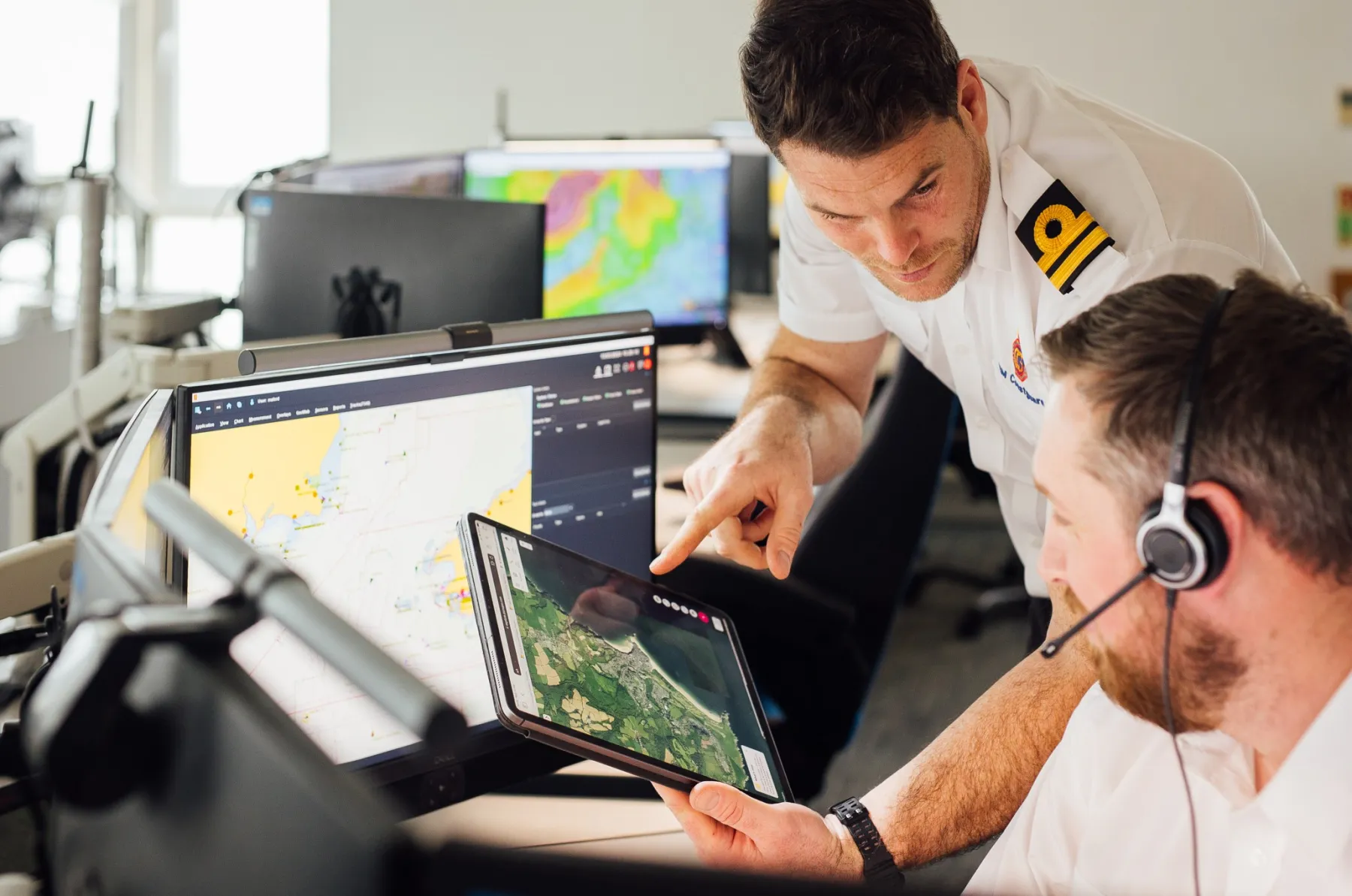
4/ The main ways seafarers obtain the Shipping Forecast is through the international NAVTEX (NAVigational TelEX) service, coordinated in the UK 24 hours a day by HM Coastguard, which is part of the MCA and responsible for the operational delivery of MSI.
This is supplemented by regular scheduled MSI broadcasts using marine VHF and MF radiotelephony. It is also available online.
5/ In addition to the Shipping Forecast, the MSI Service includes the broadcast of a High Seas Forecasts, Gale and Storm Warnings, Navigational Warnings and other urgent safety-related information.
6/ The Shipping Forecast contains details of gale warnings in force, a general synopsis and sea-area forecasts containing forecast wind direction and force, weather and visibility.
7/ The data which makes up the Shipping Forecast is provided on behalf of the MCA by the Met Office which records, predicts and reports the latest information of weather and sea state which is transmitted to seafarers by HM Coastguard.
8/ BBC radio listeners are used to the Shipping Forecast being broadcast as the full complement of 31 sea areas. But there are local versions too which are shorter.
Each of HM Coastguard’s 10 Maritime Rescue Coordination Centres has its own specific list of Shipping Forecast areas to broadcast. It saves seafarers having to listen to reports that might be from the other side of the British Isles.
9/ The Shipping Forecast is issued four times a day. Each forecast covers a period of 24 hours ahead from 6am, midday, 6pm and midnight UTC (equivalent to GMT).
10/ The statutory obligation to provide MSI, which includes the Shipping Forecast, has its roots in the Safety of Life at Sea Convention, first drawn up in 1914.
Known as SOLAS, it stems from the International Maritime Organization, a specialised agency of the United Nations, of which the UK is a leading member and sets the safety standards for global shipping.
11/ It was British Vice-Admiral Robert FitzRoy who in 1861 pioneered use of the telegraphic messaging system to transmit information across the UK.
HM Coastguard stations would receive the data and display it visually to seafarers through prominent representation as a series of conspicuous shapes (cones and drums).
Vice-Admiral FitzRoy’s work was motivated by the sinking of the steam clipper Royal Charter, with the loss of over 450 lives, in a violent storm off the coast of Anglesey on 26 October 1859.