 For HM Coastguard Search and Rescue crews, the AW139 is a hardy tool and reliable platform from which to launch rescues. For the engineers who maintain it, the aircraft are precious and complex machines that require skilled and carefully planned maintenance.
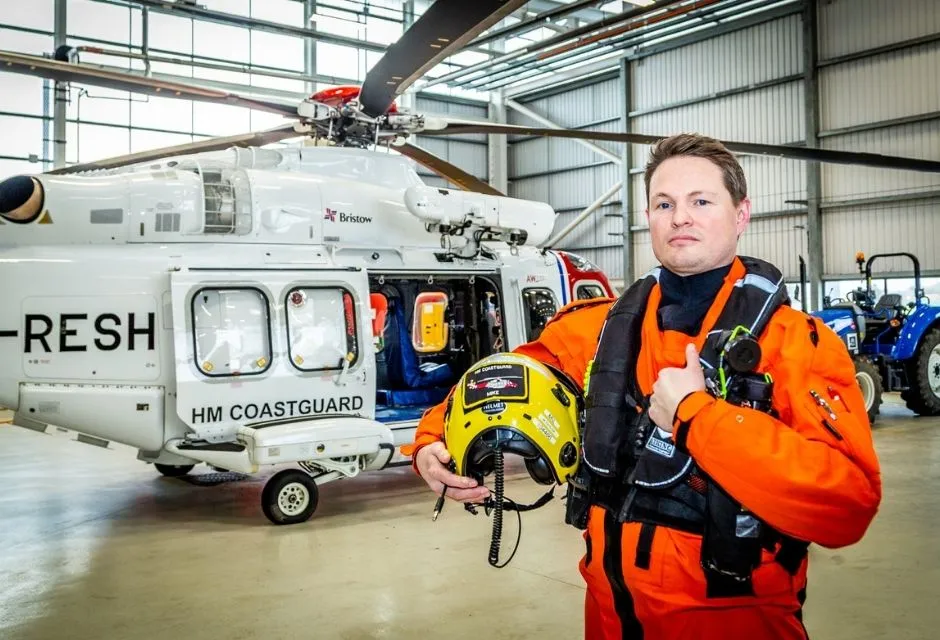
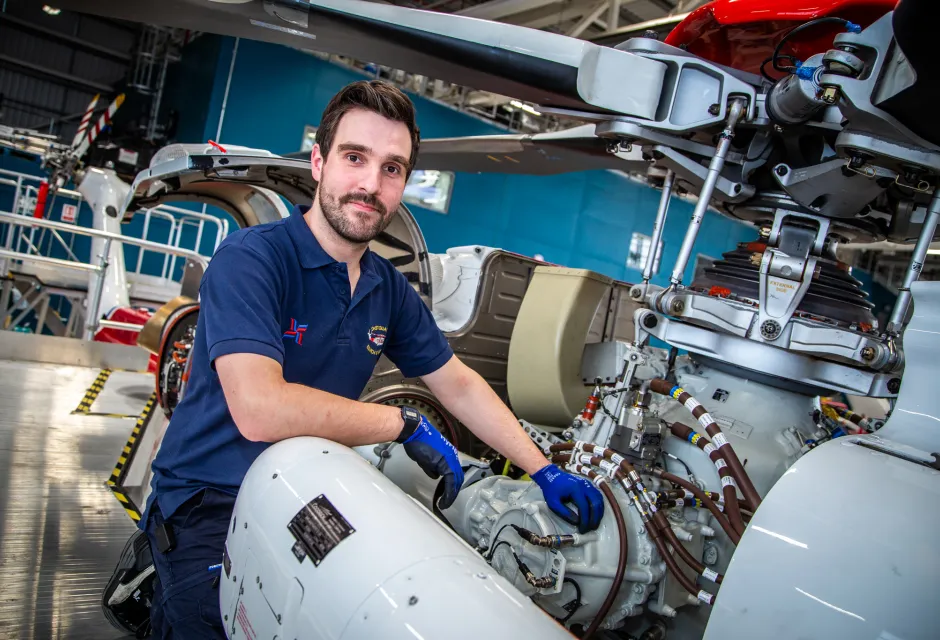
Alongside his team, B1 Mechanical Engineer Michael Ratcliffe is poised to keep the aircraft ready at a moment’s notice. The twin-engined aircraft they supervise is a Leonardo AW139; an intricate system of moving parts involving three gearboxes and thousands of components working in concert.
“My role every day is to keep the aircraft serviced and ready to go,” he explains. “That could mean both scheduled and unscheduled maintenance, turnaround inspections, checking vibration data, conducting visual inspections or refuelling before the next sortie.”
The aircraft operates 24 hours a day, seven days a week, and so do Mike and his colleagues, ensuring that the aircraft operates to exacting standards for crew and colleagues in the air.
 The AW139 operates across HM Coastguard’s fleet, which also includes Sikorsky S-92 and Leonardo AW189 helicopters, Schiebel S-100 UAVs, and a host of fixed wing aircraft.
Mike studied aircraft engineering at a local college in Barry, South Wales, where he poured over technical drawings, aircraft specification, and mechanical systems. The young engineer also explored metal work, airframe structures, and the physics behind flight and propulsion.
Mike’s route to SAR Engineering came when he met a recruiter for HM Coastguard rescue helicopter operator Bristow. After both online and telephone interviews, and a visit to Aberdeen, he was offered an apprentice role.
He says: “There's a team of 10 engineers working here at the base; we’ve got two chief engineers, and then eight additional engineers on a rotating shift. That includes people like me, a B1 Mechanical Engineer, and B2 Avionics Engineers, who focus on aircraft systems.”
 Despite the raft of high-tech equipment on board, which includes powerful winches, night vision systems and all manner of sophisticated communications devices, it’s HM Coastguard’s bright and distinctive fuselage that gets the most attention.
“Why do we keep the aircraft so clean?” He queries. “Well aside from the beautiful HM Coastguard liveries, the aircraft encounter a lot of salt in the air, especially while hovering over the coast, so they’re skin-washed regularly.”
He adds: “The AW139 is just a great cab to work on and it’s a great source of pride for me to be working on HM Coastguard Search and Rescue aircraft. Being an engineer is just a great vocation and hands-on job where we’re part of a team making a difference and helping people, every day.”