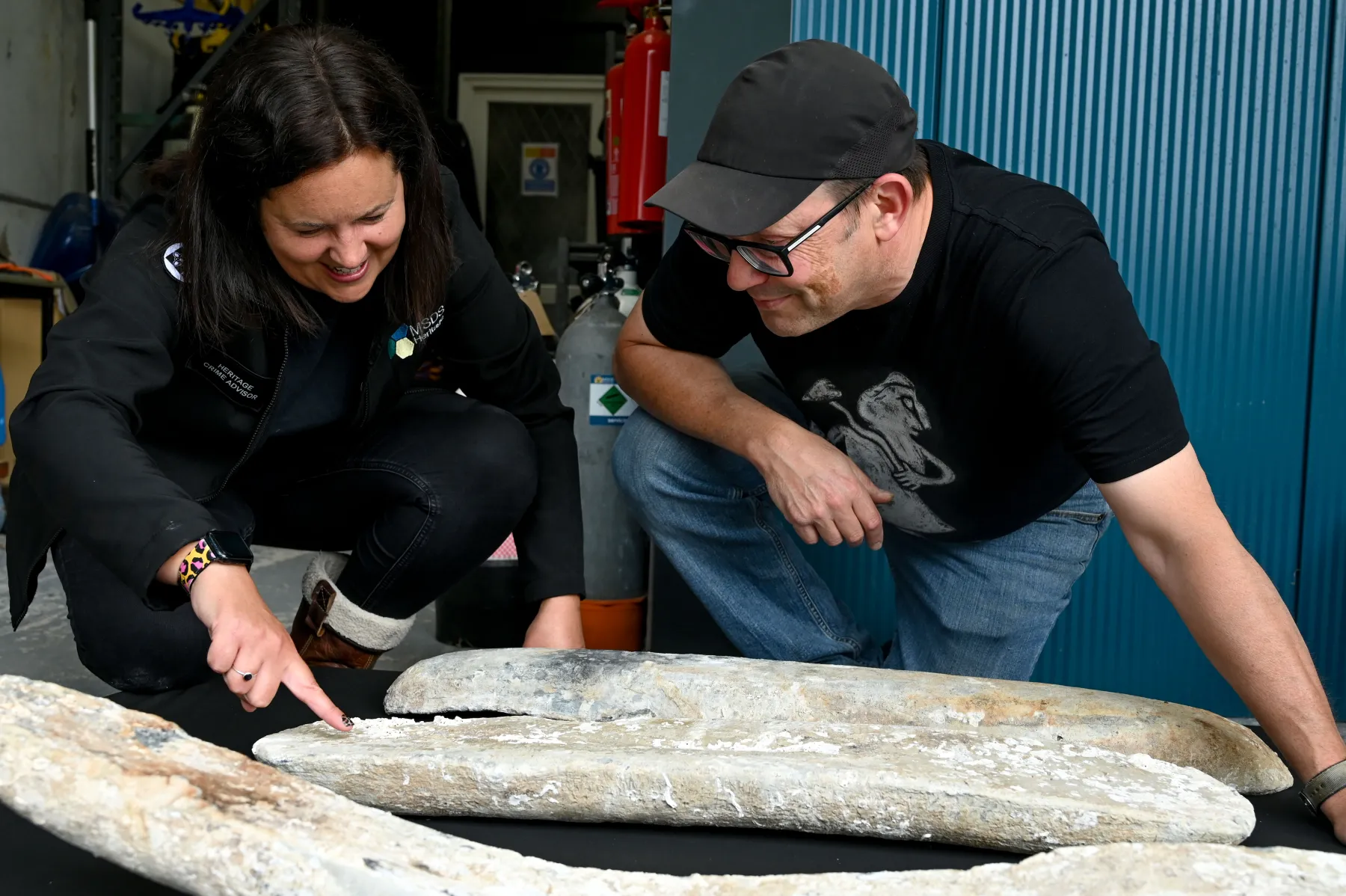

The Deputy Receiver of Wreck, Andrea Bailey, helped bring the artefact home from where it was found during survey work near Saltburn – about 260 miles away on the North Sea coast.
It had been found and correctly registered by a maritime survey company as part of pre-construction activities on Dogger Bank Wind Farm. The team initially thought it might be unexploded ordnance.
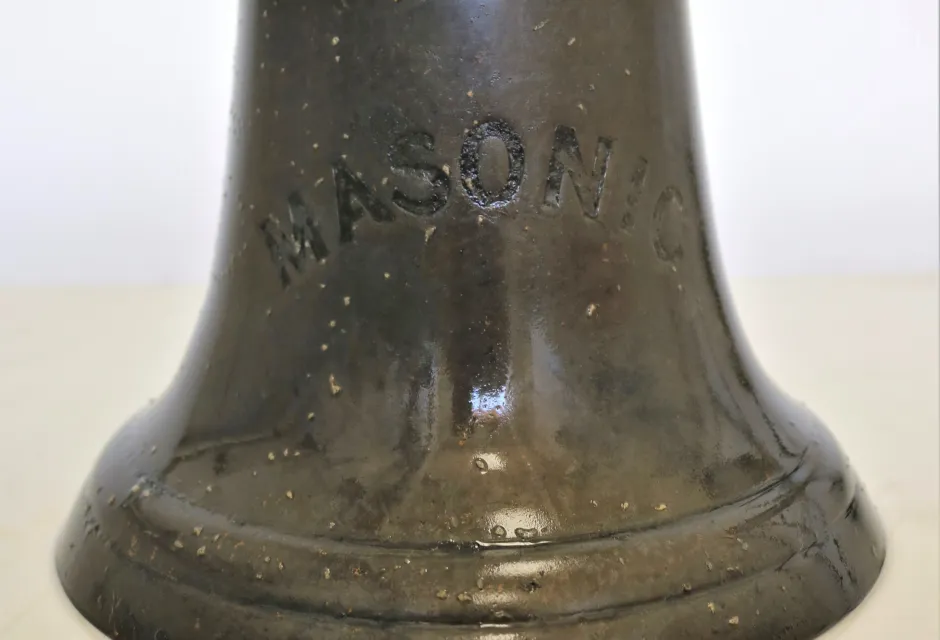
When brought to the surface, carefully conserved and inspected, it instead turned out to be a bell – bearing the word Masonic.
Using maritime records and old newspapers, research by the Deputy Receiver of Wreck and archaeology consultancy MSDS Marine uncovered the story of how the bell ended up so far away from the town where its ship was built.
• Find out more about the Receiver of Wreck
The 12kg copper-alloy object, only 21cm wide, had started life on board the wooden cargo-carrying ketch Masonic which was constructed and launched in Brightlingsea in 1876.
But just 17 years later, in November 1893, the Masonic capsized in a hurricane and was smashed to pieces with the reported loss of the whole three-man crew.
The fate of the Masonic and her crew was a tragedy
One of those to have perished is believed to have been a Mr W. Ainger, from Ipswich. He left a wife and children.
The four-day storm was blamed for the deaths of 335 people at sea, with over 140 vessels abandoned or foundering.
While no trace of the Masonic remains, the bell survived; encrusting on the seabed for well over a century until – in 2022 – it triggered a response on modern-day survey equipment and was brought into the light.

The bell was correctly registered with the Receiver of Wreck, part of HM Coastguard, and its origins traced. With no one claiming ownership, it became property of the Crown and so it was agreed its final journey would be back to Brightlingsea for exhibition in the local museum.
We are most grateful to all that have made this possible
On 21 October it was formally presented at an event attended by Deputy Receiver of Wreck Andrea Bailey.
Brightlingsea Museum curator Margaret Stone said: “We are delighted to welcome the bell from the Brightlingsea-built barge, the Masonic, to the museum.
“This is the first artefact for our collection which comes from an actual vessel built in the town during the Nineteenth Century.
“What makes it even more special are the links the Masonic has to an organisation and families still in the town – and even the museum itself. We are most grateful to all that have made this possible.”
Deputy Receiver of Wreck Andrea added: “The fate of the Masonic and her crew was a tragedy, far away from where it first set sail. So it feels right that the bell – the last surviving piece – is returned to where it was built.
“Reuniting objects with their owners or finding a proper home is best done by registering maritime finds with the Receiver of Wreck. By doing so, you can help share history and ensure artefacts end up where they truly belong.”
• Make a report to the Receiver of Wreck
Main picture: The bell of the Masonic after conservation (photo: MSDS Mariner and Dogger Bank Wind Farm)