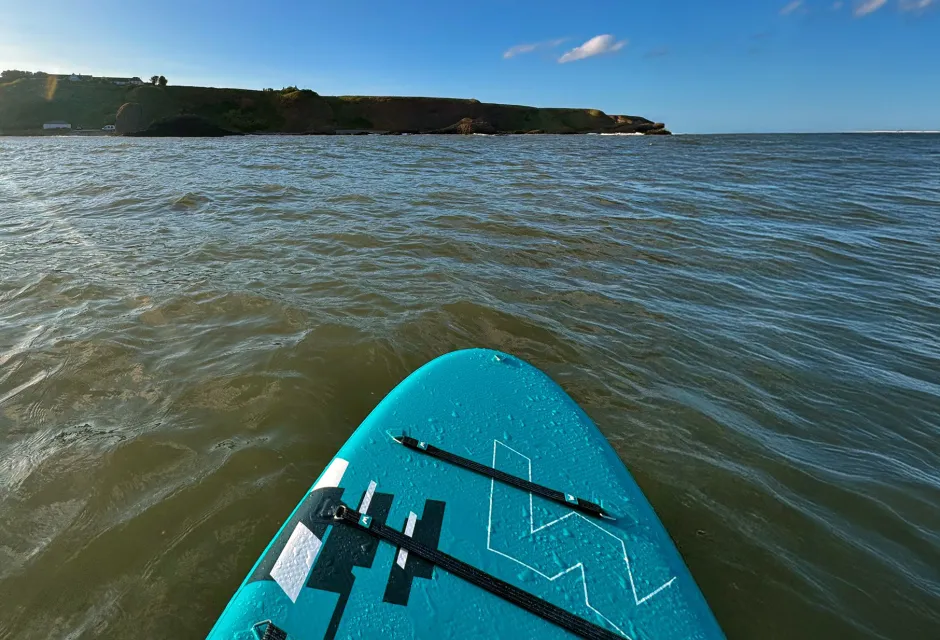
“Catterline Bay is so close to where I live. It’s just such a beautiful area,” says Eve, a 23-year-old care worker from Aberdeen. Eve and her three friends had planned to paddle, float and relax after work. The conditions seemed perfect when they left the shore at 7pm, taking a mobile phone inside their dry bag for safety.
Almost everyone was wearing wet suits and buoyancy aids, but a less experienced friend had joined the group in jogging bottoms and a t-shirt to try out their brand-new inflatable paddleboard.
“It’s probably quite naïve, but we didn’t really check tide and current, says Eve, being reminded of her ordeal. “It wasn’t windy and I felt safe. My dad’s a boater and usually he’ll mention if conditions aren’t suitable.”
“It started off really relaxed,” says Eve. “We were having a really good time. We were taking photos, and we even had some music playing. Then soon, we were struggling.”
The group noticed the waters becoming harder to navigate as the waves picked up. It was as if they were at the centre of rough seas. “It was a while before we called the Coastguard because we didn’t want to waste anyone’s time,” she says.
But it wasn’t long before Eve and her friends realised that they were in harm’s way. “Our less experienced friend was on her knees, and she’d drifted far. She looked like she was struggling.”
The situation soon progressed from bad to worse as the group paddled out to their friend, tethering their boards to hers and attempting to tow her to calmer waters. But the sea didn’t relent, and they didn’t move.
 “That was when I got scared. It wasn’t total fear, but it was building in the back of my mind. I had a wetsuit, so I took my life jacket off and passed it to my friend who was wearing soaked clothes. It was just reassurance for her because she was really panicking”, says Eve.
Tiring from the wave, the light began to fade as the group started to fall off their boards more frequently. Their friend had begun to struggle to get back aboard and wearing soaking wet clothes, she’d started to get very cold.
“My dry bag cost about £5 online and it carried my water bottle and phone. While drifting, I managed to get out my phone and managed to call the Coastguard,” says Eve.
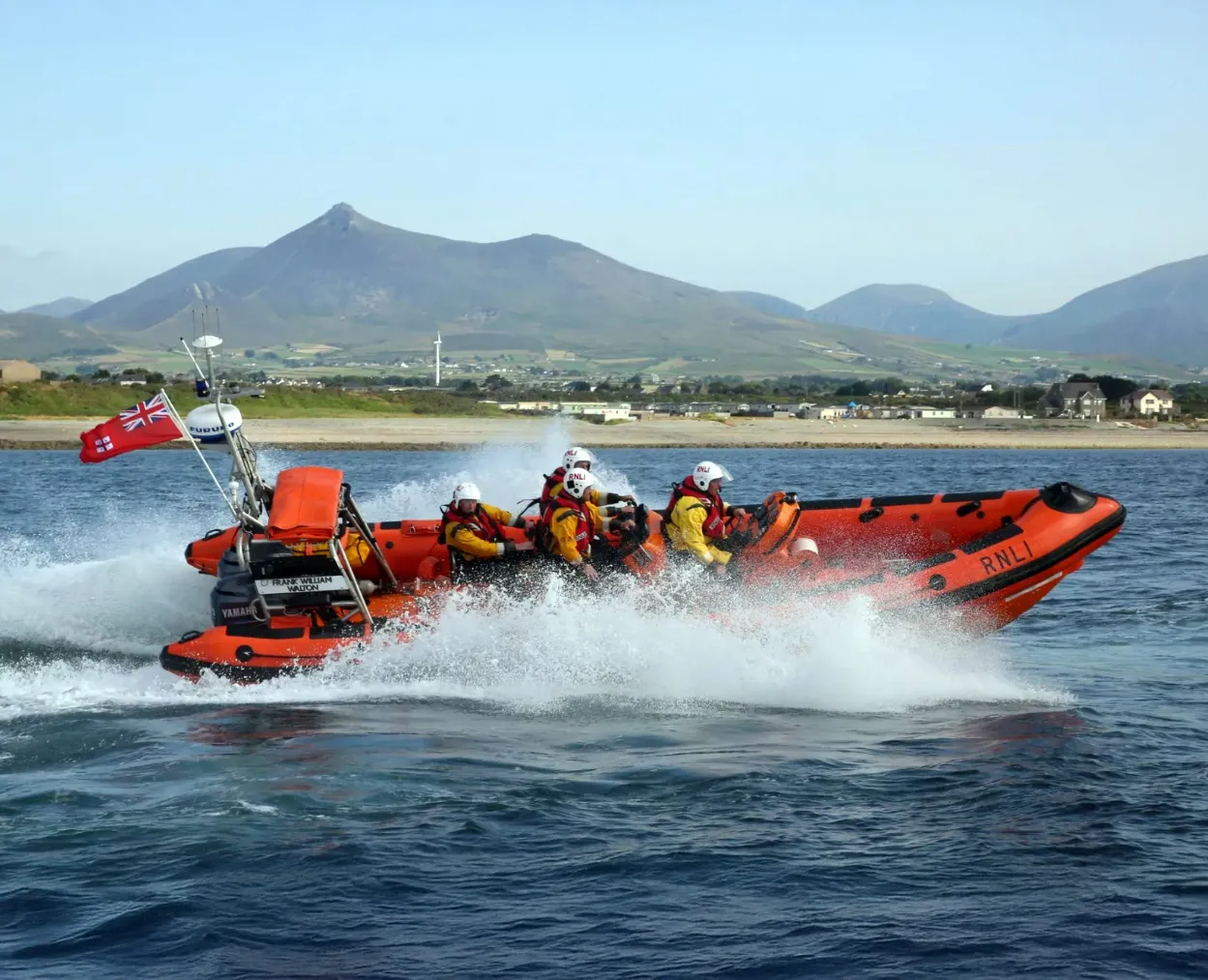
Within moments, RNLI lifeboats from Montrose and Stonehaven were dispatched, but that wasn’t the end of the ordeal. Amid choppy seas, it was proving harder for both lifeboat crews to locate the paddleboarders.
“It was half an hour before we were rescued, but it just felt never-ending. The Coastguard on the phone was amazing; she said that help was coming and kept telling us to keep calm.”
The group raised their paddles to direct the RNLI crew who were in communication with HM Coastguard Operations Room staff in Aberdeen.
Eve was soon plucked from the water, with her three friends following shortly after. Waterlogged and cold, the group were all heaved aboard, but the ordeal had been worst for their least experienced friend.
“She was vomiting as she’d ingested water,” Eve adds. “On shore, we were checked over by Coastguards before the ambulance arrived – they were lovely. Our friend got taken to hospital as her blood pressure was very low and there had been a risk of secondary drowning.”
Secondary drowning is a medical phenomenon where fluid builds up in the lungs, a potentially dangerous medical emergency after an incident.
“At that point, we were just so happy to be on dry land. We were there for about two hours as coastguards used warm air and blankets to warm us up.”
Sadly, Eve’s now reluctant to use her paddleboard. “It’s made me think about the risks really. Despite doing everything right, we still found ourselves in danger,” she says.
“But if there was one thing I’d encourage others to do, it’d be to invest in a dry bag or waterproof mobile phone pouch. If you can afford a paddleboard, you can afford £5 for a case.”
Coastal Operations Area Commander Calum Christie said: “It’s clear that having a mobile phone and the correct equipment for water sports like paddleboarding is crucial. As Eve says, items like a mobile phone pouch are very inexpensive and can provide you with a means of contacting the Coastguard in an emergency.
“As with any watersport at sea, there is always the potential for a rip current or changing wind and weather conditions to push people beyond safe distances from the coast, putting them at risk of being knocked off or separated from their craft.”
He added: “Checking tide times and weather conditions to the best of your ability is a top tip before leaving the shore. Wetsuits and Personal Flotation Devices are also recommended to prevent the most severe effects of cold water and strong winds.”