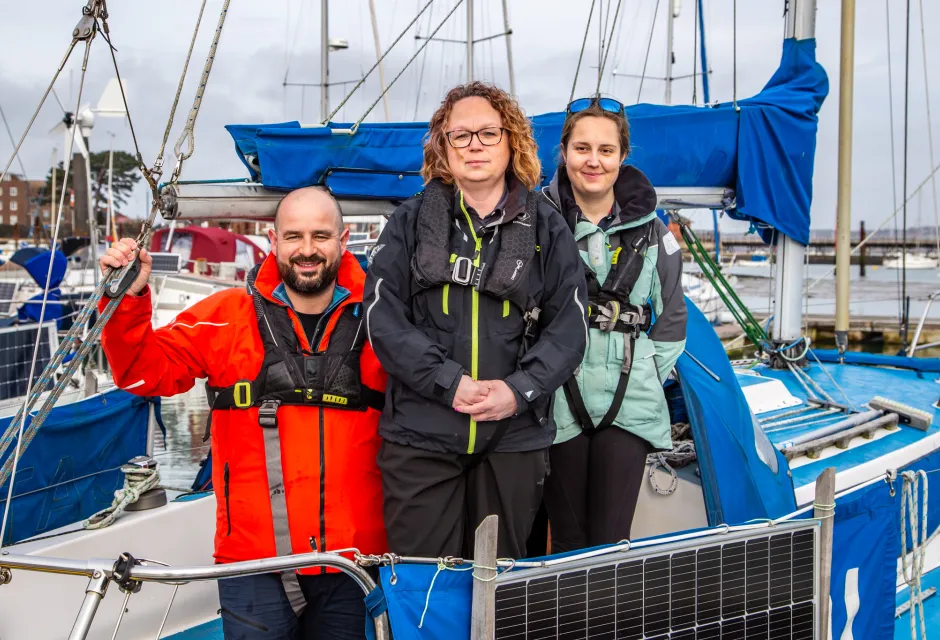
Growing up in Hereford, Alice Roat didn’t have a close relationship with the coast, but an unexpected new hobby unlocked her love for the sea and a career with HM Coastguard.
“My husband Chris suggested we get a boat. He’d done some basic sailing when younger and was keen to start again. After browsing online, we realised we’d need to properly educate ourselves before taking the plunge.”
The couple did their homework and decided that visiting different vessels in-person was sensible. With a trailer in tow, they visited various sellers in Cornwall and decided upon their first boat: a 23ft sailing vessel.
“The boat spent six months in a workshop before finally launching at Gosport,” Alice recalls. “At the time, I was working for another emergency service in Hereford, so we’d travel down to the Solent every fortnight to spend time on the boat.”
Alice took some tuition with a former Royal Navy veteran and quickly developed a passion for sailing. She completed her Day Skipper Theory Test and not long after, applied for a role with HM Coastguard.
Now a Maritime Operations Officer, Alice is often aboard her boat when she’s not in the Operations Room at HM Coastguard’s Joint Rescue Coordination Centre (JRCC).
 On days off, she enjoys plotting and planning journeys, while her husband Chris takes charge of the sails and tiller of their current boat, a 26ft Westerly Griffin. In August, the pair tackled their longest voyage to date, sailing from Portsmouth to Weymouth.
“Working at HM Coastguard makes appreciate just how much boat owners need to do to stay safe at sea, including many things I hadn’t previously considered,” Alice admits.
As someone who regularly responds to vessels in distress, she emphasises the importance of properly registering safety devices – from vessel MMSI numbers to contact and next of kin details stored with EPIRBs and PLBs.
Having accurate information enables Alice and her team to swiftly identify who’s in trouble, where they are, and what kind of emergency response is needed.
“It’s easy to forget, but my advice for lifesaving equipment is register straight away with the latest information,” she advises. “And if you move house or change your name or contact details, don’t forget to update your registration to match.”
Alice and her colleagues have seen the lifesaving capabilities of such radio devices first hand, helping to keep people safe and ensuring the best outcomes in emergencies.
“Someone could go overboard five or six miles offshore, or they could fall into water and sustain injuries on a harbourside or marina. It could be a single sailor, or a group. We’ll always respond straight away,” says Alice.
Another crucial piece of lifesaving kit is a lifejacket. Alice and her husband have already replaced the ones they bought as beginners. With so many brands, types and levels on the market, it’s a difficult decision over which to choose.
“We decided that it was time to upgrade and buy new Personal Flotation Devices (PFDs), but there are so many types, it can be a bit of a minefield. I’m always harnessed to the boat, so I have a more basic setup, but Chris is moving about onboard more often, so his new jacket also has a built-in transponder. Make sure you have one that fits you best.”
 Speaking about HM Coastguard’s free Boating Safety Checklists, Alice said: “We keep one in our boat as it reminds us of various things; from crew, training and skills to servicing, equipment and emergency action plans.
“The checklist stops us being as distracted by routine logistics, like when to arrive in harbour or when to catch the tide. Instead, it focuses us on safety and the basics, like whether our passengers know what to do in an emergency, can they operate a VHF radio? Who’s going to step in if the skipper is incapacitated?”
For budding enthusiasts like Alice and Chris, there’s always something new and challenging when they’re on the water, which is what makes their trips so fun – even if it is the complexities of entering a marina in the dark or contending with rougher than forecast conditions upon arrival.
“In terms of Coastguarding, no two days are the same and there’s nothing like the sense of achievement that comes with a rescue,” says Alice. “We’ve sent help, and they’ve been rescued. It’s something I’m ever so proud of."