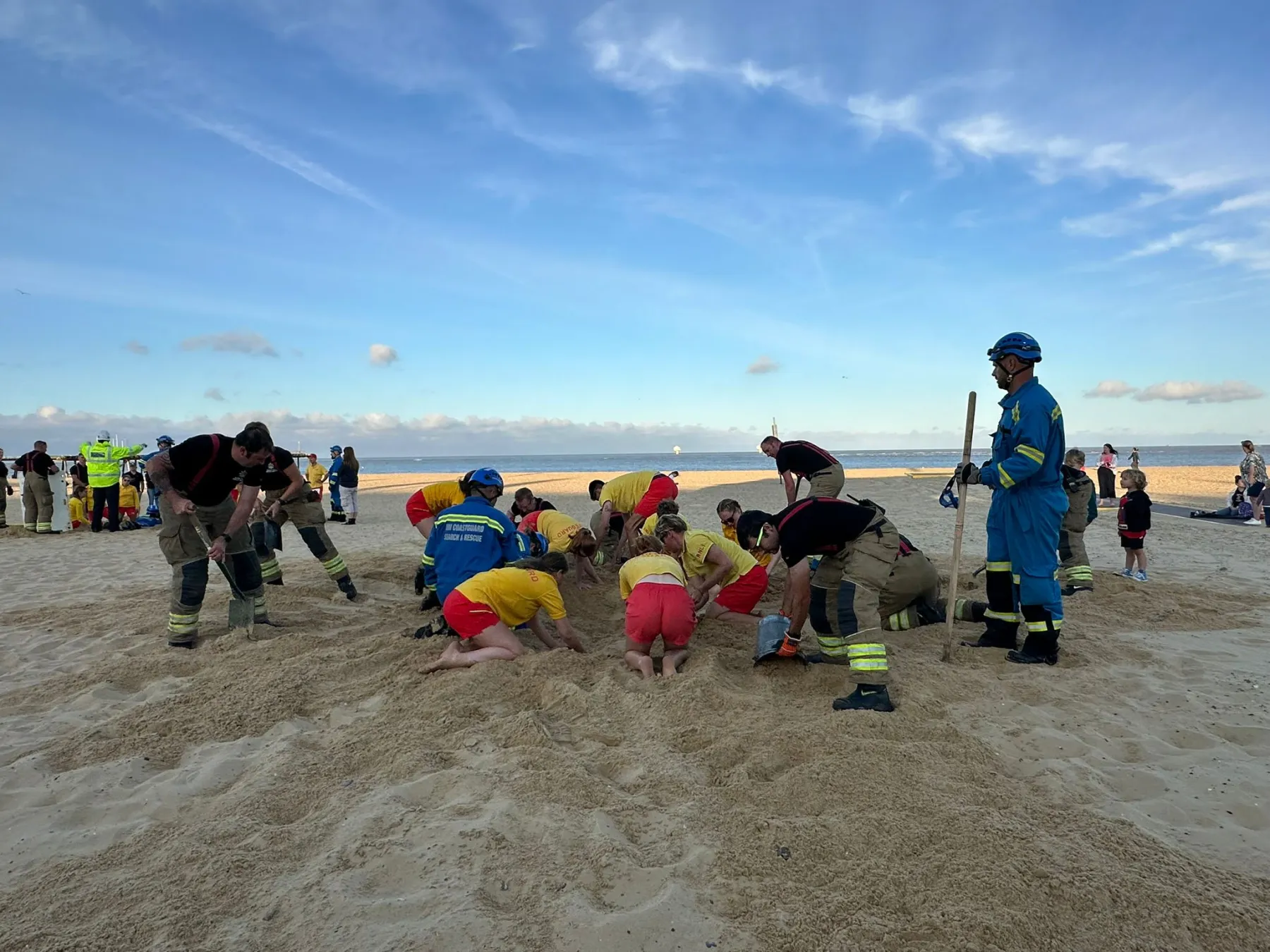
The hole, which went down more than five feet, took 30 minutes to be filled in by three members of Wyke Coastguard Rescue Team (CRT) with the help of members of the public.
Weymouth beach is popular with families in the summer. During the day children are running about and in the evening people stroll along the sand after sunset.
Deep holes can be hard to spot in the sand
The hole was found late on 30 June when the CRT was heading home after assisting with a search for a person.
Senior Coastal Operations Officer Allan Norman said: “Enjoying the sand by the seaside is a Great British tradition and long may that continue!
“Buckets and spades are a lot of fun – but most of us wouldn’t dream of digging a 5ft deep hole at a park where youngsters are running about and people walk in the evening.
“It’s the same at busy beaches: deep holes can be hard to spot in the sand and pose the risk of someone falling in and being injured, particularly little children and older people.
“There’s also the danger of the sand collapsing on top of you, causing injury and suffocation. These incidents require whole teams of rescuers.
“We’d just ask people to stay aware of who else is on the beach and the potential risks of digging too deep.”
Allan's safety tips:
- Keep holes no deeper than waist height
- Avoid digging tunnels, which are more prone to collapse
- Fill in holes before leaving the beach to prevent injuries to others
- If you’re in trouble by the coast, call 999 and ask for Coastguard
Farm machinery was brought in to make safe an eight-foot hole reported to Padstow Coastguard Rescue Team at Tregirls Beach in Cornwall on June 2024.
And in June 2023 a father urged people to take care digging on the beach after his 14-year-old son became trapped when a pile of excavated sand collapsed on top of him at Anderby Creek, Lincolnshire.
• If you see an emergency by the coast, call 999 and ask for the Coastguard.
Main photo: Weymouth beach, not far from where the hole was dug (Image: Ian Woolcock/Shutterstock.com)