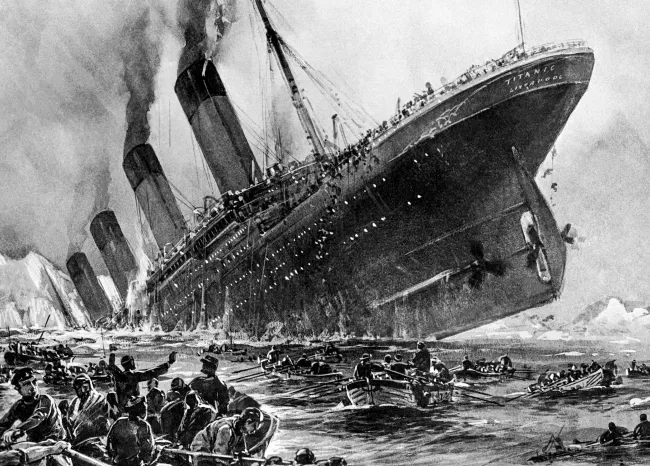
Built between 1909 and 1911 by Harland and Wolff in Belfast at a cost of £1.5million (more than £170million today), RMS Titanic was hailed as ‘unsinkable’ and a marvel of engineering when she departed Southampton on 10 April 1912.
But tragically, more than 800 passengers and 688 crew members lost their lives when the ship collided with an iceberg 340 miles off the Canadian coast. It was a catastrophe that shocked the world and exposed gaps in maritime safety.
While the horrors of the incident are commonly explored in film, television and books, what did the fateful event mean for ship safety?

International safety reform: SOLAS and lifeboats
Just two years after the incident, the UK led negotiations in London for the International Convention for the Safety of Life at Sea (SOLAS). The landmark agreement, reinforced by the Merchant Shipping Act 1914, mandated that passenger ships carry enough lifeboats for everyone on board.
SOLAS also formalised lifeboat drills for crew and passengers, setting international standards for crew training – these practices remain fundamental to maritime safety today.
24-hour radio communications
Although RMS Titanic carried pioneering wireless telegraphy equipment, operators were not on duty round the clock. This significant gap contributed to delays in distress calls.
Through the Wireless Telegraphy Act 1913, all vessels were required to maintain a 24-hour wireless watch, ensuring that emergencies could be communicated and acted upon immediately.
Bulkhead and hull design
Titanic had 16 watertight compartments designed to keep her afloat, these compartments however were not high enough to prevent water spilling over in a major incident.
British Board of Trade regulations subsequently mandated taller bulkheads, improved pumping systems and better compartmentalisation, making ships more resilient to flooding.

Transparency and accountability
Overconfidence and complacence had been part of Titanic’s downfall – people had not necessarily imagined that she could have foundered.
The Merchant Shipping Act 1914 gave the Board of Trade greater powers to inspect and enforce safety standards. SOLAS strengthened the approach by introducing international certification, inspections and compliance, ensuring safety standards consistently applied across countries.
Legacy: the lessons learned
More than a century on, the Maritime and Coastguard Agency (MCA) carries forward the lessons of Titanic.
From coordinating lifesaving rescues and maintaining 24-hour communications through HM Coastguard, to enforcing rigorous safety standards for ships and crews, their work ensures that the tragedies of the past help shape a safer future for those at sea.