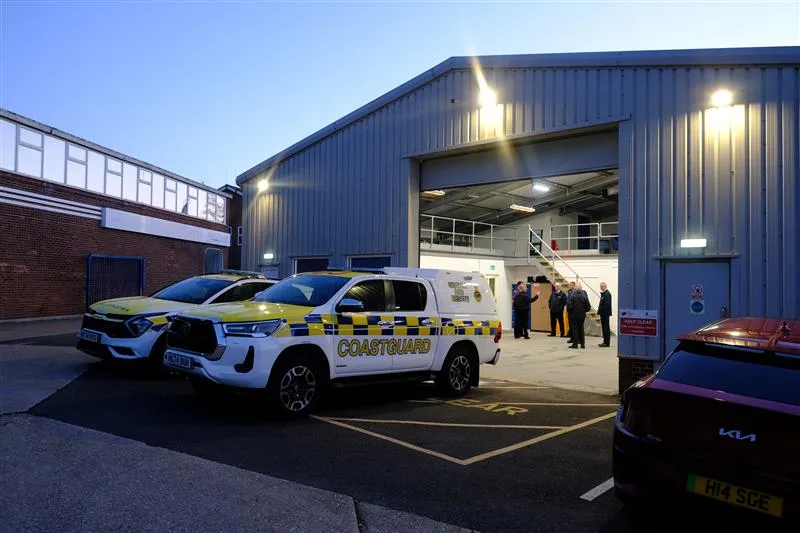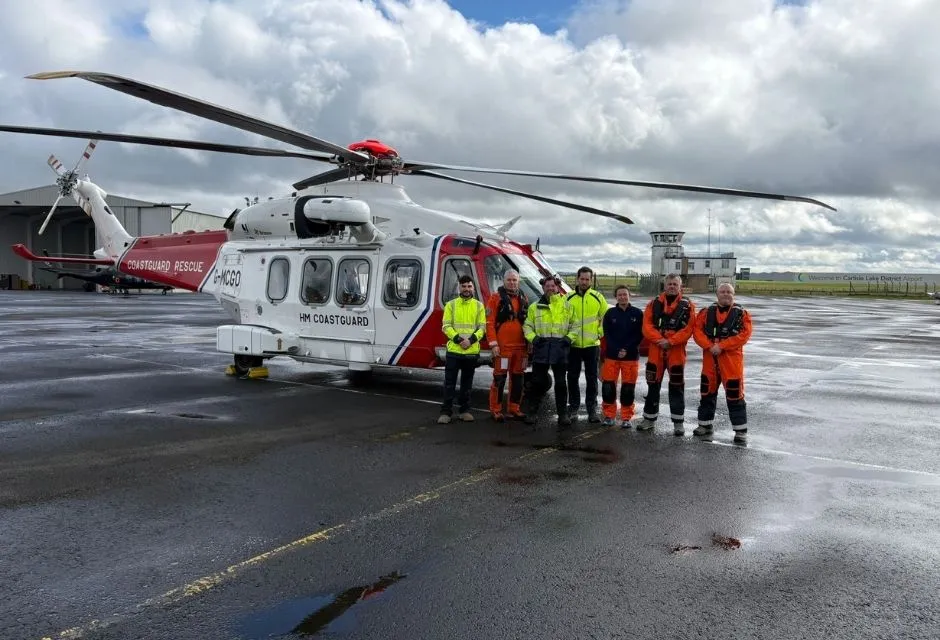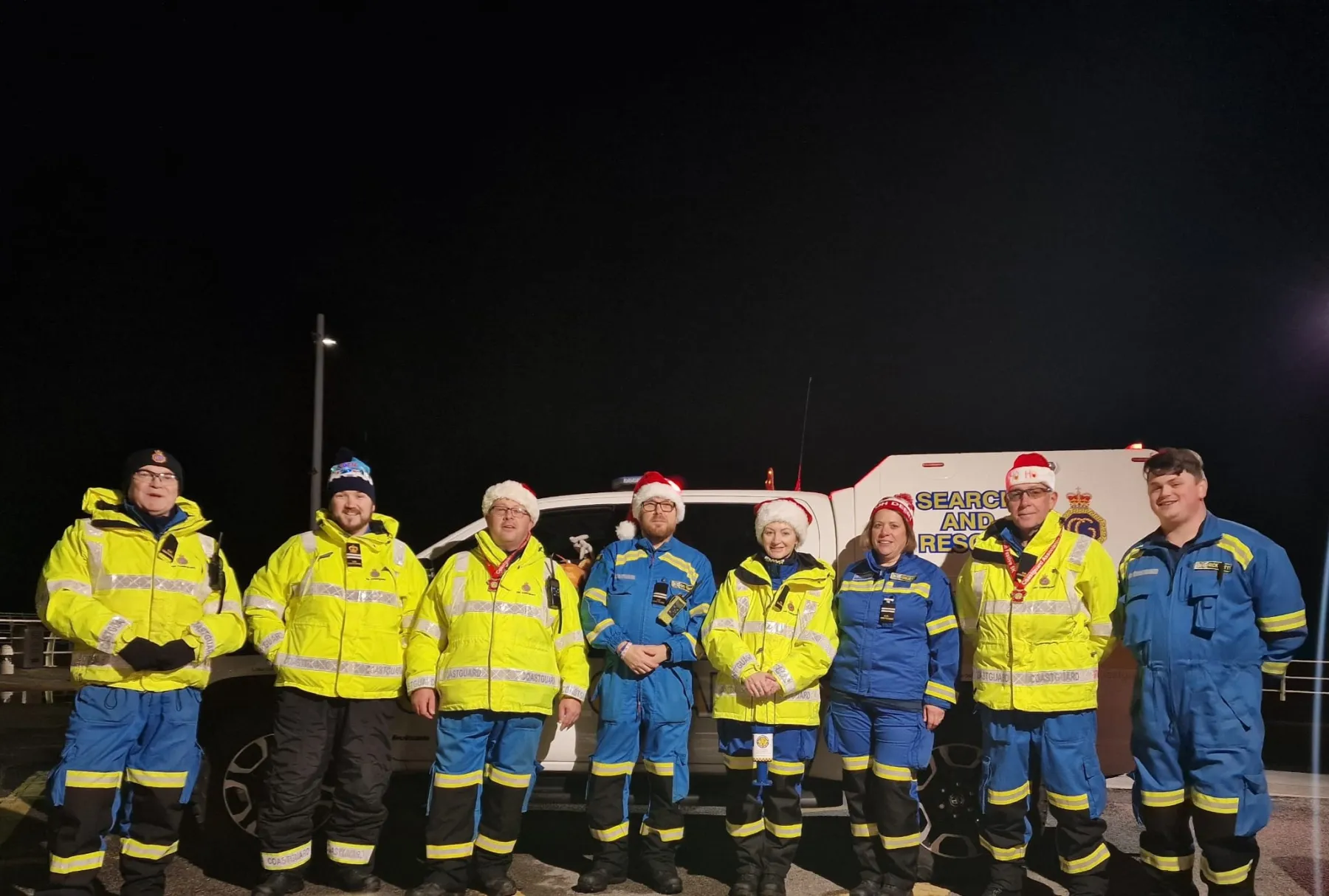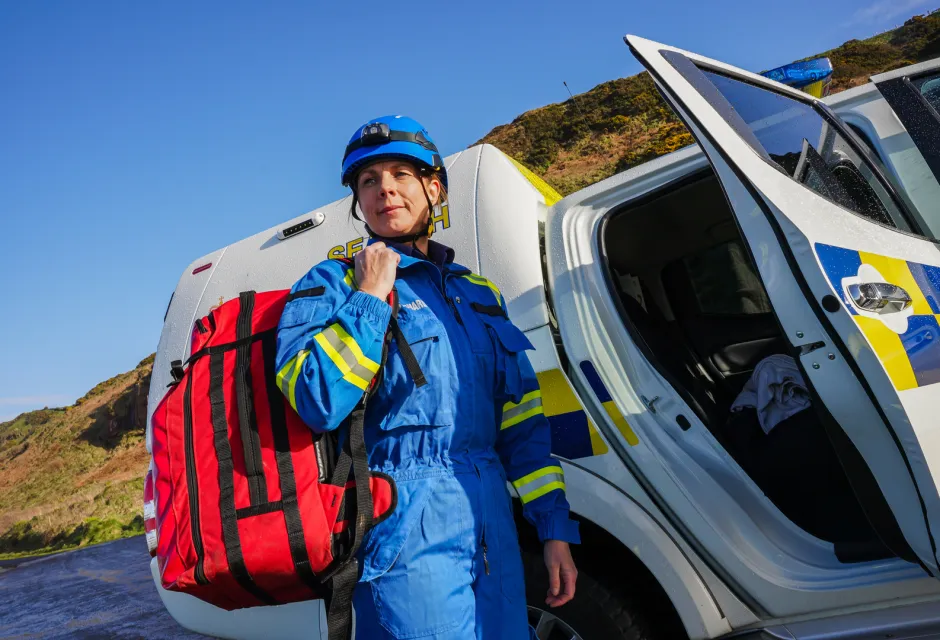
Around 300 Coastguard Rescue Teams (CRTs) along the UK shoreline are on 24-hour readiness to deal with the variety of incidents that come their way.
As well as fundamental skills, such as searching, casualty care and water rescue, the volunteer Coastguard Rescue Officers (CROs) that make up the CRTs are specially trained and equipped for their particular local conditions.
These capabilities are joined by HM Coastguard search and rescue helicopters, lifeboats, and fellow emergency services, among others.
How they respond will depend on the situation, the environment, and how many people are involved. The safety of both the public and CROs is always the priority.
Read on to discover how these volunteer lifesavers are trained to be ready for anything.
• If you see an emergency by the coast, call 999 and ask for the Coastguard.
Water
Emergencies in water close to shore might be someone who has got out of their depth, fallen in, been swept in by a wave, or been caught by the tide or currents.
The solution is just a case of hauling out the casualty, right? Wrong.

Different situations require different responses to recover the casualty safely from water, but always involve specialist training, rescue equipment, protective kit and teamwork.
Someone struggling in water close to shore might be saved by a CRO using specialist techniques to reach them from a pier or harbour wall, or involve wading or swimming out, tethered to rescuers on the shore, to bring the casualty to safety.
• Swimmer saved in dramatic rescue
The CRO will always don protective equipment, such as a water rescue lifejacket or a personal flotation device (PFD), helmets and protective outer layers.
• Two pulled from harbour in double water rescue
It’s strength in numbers against powerful conditions such as strong waves, currents or flood water. In these conditions CROs form a stable group, holding onto one another in a variety of secure formations to wade out and retrieve a casualty safely.
Other rescue techniques are land-based including throwing a lifeline; securing CROs to a fixed point to reach into the water; or using lines to extricate a trapped person.
All these techniques take skill from training and practice to get right.
Mud, soft ground and quicksand
Without the right training and equipment, attempting to rescue someone stuck in mud is likely to end up with another casualty trapped and also facing the dangers of incoming tide, cold and exposure, and the effects of entrapment.
In areas where mud is a risk, CROs have a variety of methods depending on the type of ground, distance to rescue, and how tightly the person is stuck.

Key equipment includes a drysuit, gloves and helmet, personal flotation device, and weight-spreading kit to resist sinking, such as mudders (mud shoes) worn over boots, mud stretchers, and inflatable platforms (sleds) – securely connected with a safety line to their shoreside colleagues.
• Rising tide sets clock ticking for pair trapped in mud
CROs will always go to the casualty as a pair, for safety. They might walk out or, if the mud is particularly treacherous, use the Pepper Pot technique of switching between the stretchers and inflatable platform moved forward in turn, like mobile stepping stones.
Once with the casualty, extraction is always carried out from the stretchers to avoid the CROs getting stuck. In severe cases, a probe is used to inject compressed air or water into the mud to loosen its grip.
Once freed, the casualty can be carefully pulled back to safety on the sled or stretcher – by hand, by the rest of the CRT waiting on firm ground, or by mechanical winch.
Cliffs
Clifftops are dangerous places, and visitors to the coast can very easily become casualties in need of rescue. People can fall, get stuck, or – with help from HM Coastguard – need help to escape up a cliff when cut off by the incoming tide.

In many coastal areas of the UK where cliffs are a feature, specialist coastguards are trained in rope rescue techniques and equipment, following rigorous safety procedures to protect themselves, their colleagues and the casualties.
Additional skills are required by those who go over the cliff. These are known as Rope Rescue Technicians who can recover casualties using specialist techniques and equipment, including rescue slings, harnesses and stretchers.
• Clifftop rescue for fishing trip youngsters in Antrim
Rope Rescue is not confined to cliff incidents – it can be used in any situation where a rescuer needs to gain access or would be at risk, such as sea walls, rock armour, bridges and docks.
• Birdwatcher’s tide warning after cliff rescue by HM Coastguard rope team
To be an effective member of any Coastguard Rescue Team, a CRO must understand and employ the principal objectives of casualty rescue. All rescue team members are fully trained through HM Coastguard’s competency-based training system before becoming involved operationally.
Sand collapse
It’s not unusual for CRTs to be called to rescue someone – often a child – from under sand that has collapsed during play-digging of a hole or tunnel at the beach.
 One of the main risks is suffocation, so sand rescues must be carried out quickly and effectively to clear the airway and avoid further collapse of the hole onto the casualty or rescuers.
The focus is on freeing their airway and chest to ensure they can breathe.
A first ring of rescuers sweeps back the sand by using their hands to avoid the risk of injuring the casualty. They are aiming to reach the casualty while making the hole shallower and less likely to collapse.
To prevent sand falling back in, the first diggers are backed up by a second and third line moving the excavated material further away using rescue tools and hands. Time is of the essence so rescuers may organise others to assist using whatever they can: buckets, spades and even frisbees.
• Dad’s safety appeal after son trapped under collapsed sand
The best guidance for beach-goers is to be aware of the potential risks while digging. Do not dig holes deep enough or into dunes which could trap someone. Fill holes in before going home so no one injures themselves or becomes trapped falling in.
Casualty care
All Coastguards are trained in Coastguard Emergency Responder Casualty Care (CERCC), so they can stabilise and treat injuries, manage illnesses while awaiting paramedics or Emergency Doctors.
 They can also package and move casualties to where they can be treated or taken to the next level of care.
Coastguards use Casualty Check Cards, similar to those used in other emergency services, to operate quickly and effectively with a high level of casualty care.
CERCC is non-diagnostic and symptom-based, enabling coastguards to preserve life, prevent deterioration and promote recovery.
CROs are also adept at securely “packaging” a casualty, onto a stretcher for example, and safely extracting them from difficult or dangerous areas.
Sometimes they will need to ready them for transportation to hospital via an HM Coastguard search and rescue helicopter or an ambulance.
Rescue Teams can also assist on the ground with airborne medical support by setting up and making safe Helicopter Landing Sites, which are used to convey casualties to onward specialist medical care.
Floods
When major floods hit, HM Coastguard is ready to respond as one of the UK’s four statutory emergency services, whether by the coast or inland.

All CROs have skills in water rescue, casualty care and essential coastal flood response. But some are also taught expertise in wider flooding incidents – including inland. When disaster strikes, they can be brought in from around the country to form specialist Flood Response Teams to support affected areas.
• Coastguards from across the UK supporting flood response to Storm Babet
Training, often alongside other emergency services, can include rescues from flooded vehicles; retrieving people from floodwater; and safe navigation of flooded streets to reach casualties.
This involves specialist training and techniques such as working as a team to move through floodwater, using a wading pole to check for underwater dangers, and using rafts to bring people to safety.
• Flood exercise tests emergency crews’ rapids reaction
CROs’ training and familiarity with equipment vital for flood response, such as dry suits, lifejackets and two types of rescue rafts, makes them especially effective, on top of their skills in search, working with helicopters and casualty care.
Operations might include helping to evacuate people from their homes, setting up landing sites for HM Coastguard search and rescue helicopters, or looking for people missing in the floods.
Search
People often become lost or go missing at the coast, and coastguards can draw upon their training, experience and expertise to find them.

As part of that capability, every Coastguard Rescue Team has specialist training in Lost and Missing Persons Search (LAMPS) which includes people who are overdue, injured or despondent, or survivors from a distressed vessel or aircraft. They are also able to search for vessels or people missing in the water.
Though most of their work is coastal, coastguards are search and rescue professionals using specialist skills that are often called upon by emergency service colleagues, such as police forces.
• Rescue and relief for missing girl’s family
In busy areas, there can be several missing people at the same time. On one such occasion, Exmouth coastguards were called to multiple reports of missing children at a single beach.
• Missing children spark string of searches at Exmouth
On the scene
 Coastguards can be called upon to provide an initial ‘eyes on’ response to incidents on the coast: from the supervision of whales washing ashore, to safety cordons around suspected ordnance or pollution, and checking reports.
CROs are also ready to assist fellow emergency services respond to serious incidents, offering casualty care, their rescue capability, on-scene support, and communications.
Examples where CROs responded include two serious collisions between trains: one at Talerddig in Wales on 21 October 2024, and another between Andover and Salisbury in Wiltshire on 31 October 2021.
In heavy snow CROs have been deployed in 4x4 vehicles to assist other emergency services, supplies, and workers to reach care home residents and other vulnerable people.
Coastguards have also provided support for civil contingencies, such as in 2021 for the G7 Summit in Cornwall and COP26 in Glasgow, and in 2023 with waterside safety patrols for the Eurovision song contest. They also regularly represent HM Coastguard at key national commemorations and services such as Remembrance Day.
And now for something completely different...
In particularly unusual situations, it’s time for CROs to think outside the box.
That’s what happened when a road blockage near a popular coastal beauty spot caused traffic to back up onto a tidal causeway, trapping vehicles on the route with the water coming in.
Using their local knowledge, CROs arranged to open up a field to release the congestion and allow cars to escape the rising tide. When the road was later cleared, everyone was able to go safely home.
• If you see an emergency by the coast, call 999 and ask for the Coastguard.