The tide's coming in and it's getting dark...
“Rope rescue, three youngsters…” recalls Norman Bridges, Senior Maritime Operations Officer at Belfast MRCC. “I remember it well. Initially we were responding to a single call from a member of the public at Ramore Head, who’d seen a person with bad injuries at the foot of the cliffs.
“The moment we tasked an HM Coastguard search and rescue helicopter, RNLI Portrush lifeboat and Coastguard Rescue Teams (CRTs) from Coleraine and Ballycastle to attend, we received a second call reporting another casualty stuck midway up the cliff."
Call-outs to Ramore Head happen a few times a year, but on every occasion it puts Coastguards on edge, explains Alistair Simpson, a Station Officer leading Coleraine’s 19-strong Coastguard Rescue Team.
He says: “Ramore Head is a 100ft high cliff. These three young people had been fishing on the beach below and had become trapped by an incoming tide. They were cut off and decided to climb the cliff. They’d climbed about 30ft up when two of them fell, with one sustaining a serious injury.
Stuck 'cragfast'
“Another became stuck or ‘cragfast’ halfway up the cliff – he couldn’t climb upwards, and he’d just seen his friends fall to the rocks and tide below, so he couldn’t go down either."
And it’s not just the precarious clifftop that’s difficult for coastguards called to the popular County Antrim viewpoint. It presents a special challenge for coastguards at Coleraine and Ballycastle.
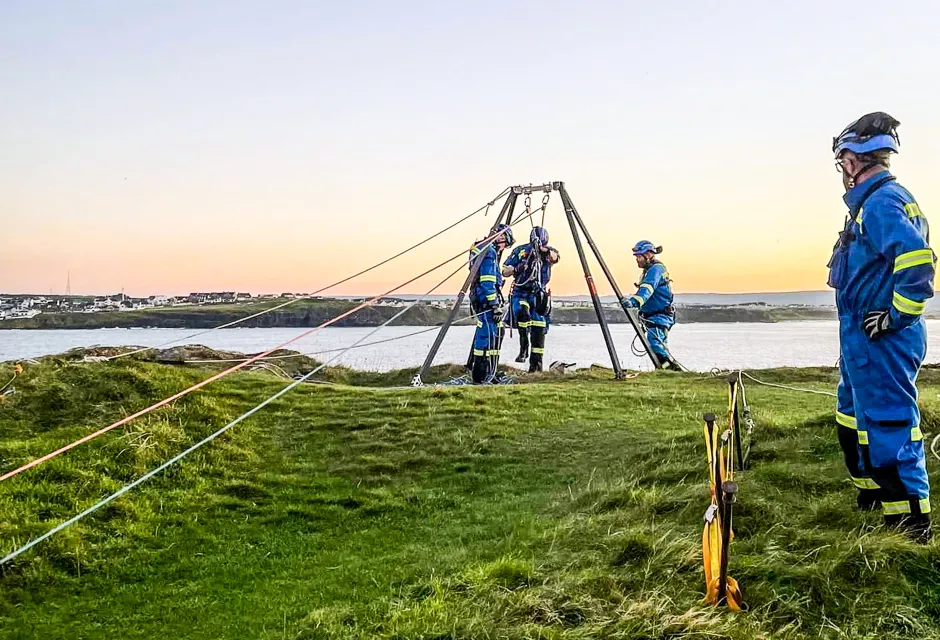
“The cliff’s geology itself is a challenge,” says Alistair, a coastguard with more than 30 years’ experience. “It’s a difficult location to get a reliable anchor point that holds well. In this case, we had to locate stakes quite far from the clifftop beyond a public footpath, due to the area’s unreliable and rocky ground.”
 Ramore Head, a renowned beauty spot with clifftop access, is highly visible and easily reached. Crowds soon gathered to watch the situation unfold, recording footage with their smartphones and posting it to social media.
“It’s always a concern for us, both on the ground and here in the Operations Room,” says Norman, who also volunteers as a Deputy Station Officer (DSO) at neighbouring station Kilkeel.
Gathering crowds and social media
“In many cases, rapid social media coverage can cause issues with crowds. We don’t let anything distract us from saving lives and our sole focus is on the rescue at hand. But we’re also aware that parents, family and relatives could be seeing an incident involving their loved ones unfold through social media on a mobile phone.”
While RNLI Portrush sent their lifeboat out to retrieve the pair on rocks below the cliff, Coastguards’ attention quickly turned to the casualty stuck halfway up.
“We weren’t really sure what condition they were in, or even what age they were,” says Alistair, who sent a member of his team to assess the situation from the clifftop.
“There’s always an additional element when you’re dealing with children and how they’ll react. It was getting dark, and they’re scared. In this case they’re also starting to get cold, stiff and sore from holding themselves in such a precarious position.
“We train to make rescues as safe as possible for ourselves, our casualties and bystanders, who are moving closer to a dangerous cliff edge to take pictures.”
Safety advice and a positive outcome
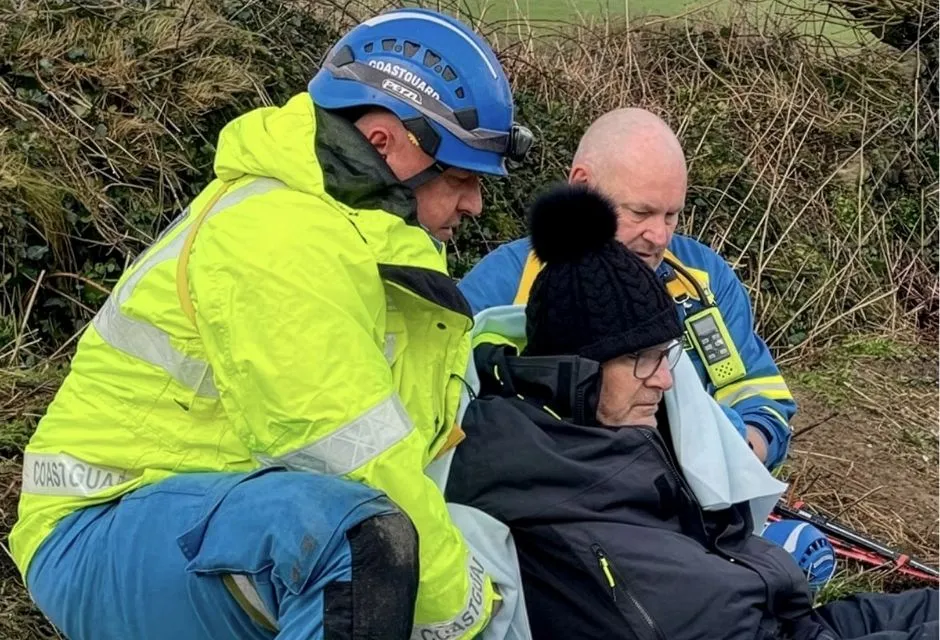
Police were called to help with bystander safety, and a rope technician lowered himself down to the casualty, who was retrieved from the cliff side. Once the casualties were brought to safety by coastguards and the RNLI lifeboat crew, officers contacted the Ops room team, who were keen to emphasise the dangers of climbing on cliffs.
“I asked coastguards to issue some safety advice to our casualties,” says Norman. “But they reported back that parents were ‘giving much better advice than we ever could’... As you can imagine, we left them to it!”
Alistair adds: “It’s always a good feeling when the team puts its training into practice. Afterwards, you drive away from the scene knowing that, in this case, you’ve used those skills to provide a positive outcome for everyone.
“Stuck on a sheer cliff with sharp rocks and water below, there would’ve been no way to get off the cliff safely without our help. It happens very easily, as people can be scared by an incoming tide or worsening weather and be tempted to climb cliffs, thinking they see a safe or easy route to the top.
“There’s always a very real risk that such decisions might prove fatal. With this rescue, it’s very fortunate that our casualties had a positive outcome. We’d urge people to stay away from cliffs and be aware of the dangers.”

Alistair and Norman’s top cliff safety tips
- Know your local tide times. Look for exit points that can be cut off or made inaccessible by an incoming tide and give yourself time to leave.
- Always take a fully charged mobile phone. Being able to call the Coastguard for help might save your life, or the lives of others.
- Don’t climb on cliffs. There are so many dangers, from slips and tidal cutoff to falling cliff debris.
- Don’t delay calling for help. If you or others are in danger at the coast, dial 999 and ask for Coastguard.