“It happened such a while ago, but I’ve still got the cast on to prove it,” says Professor Chris Lavy, an Oxford-based NHS Consultant and Orthopaedic Surgeon.
It had been an overcast January day when the Professor’s holiday changed dramatically during a coastal walk in South Cornwall. The professor, his dog, and eight friends had been on a four-day walk along the South West Coast Path when disaster struck somewhere between the villages of Par and Fowey.

“Conditions weren’t great. There'd been general drizzle landing on top of wet mud, but we were well equipped,” says Chris.
“I saw a sheep in the nearby field, so I called my labrador over. I put my walking sticks down to put his lead on, but when he gave me a little tug, I slipped. My leg crumpled and I heard crack, crack, crack. I knew immediately that I’d broken my ankle.”
With adrenaline pumping, Chris’ ankle wasn’t sore when he tried to move, but the broken joint was unable to bear any weight. After a minute, it had started to swell and became very painful.
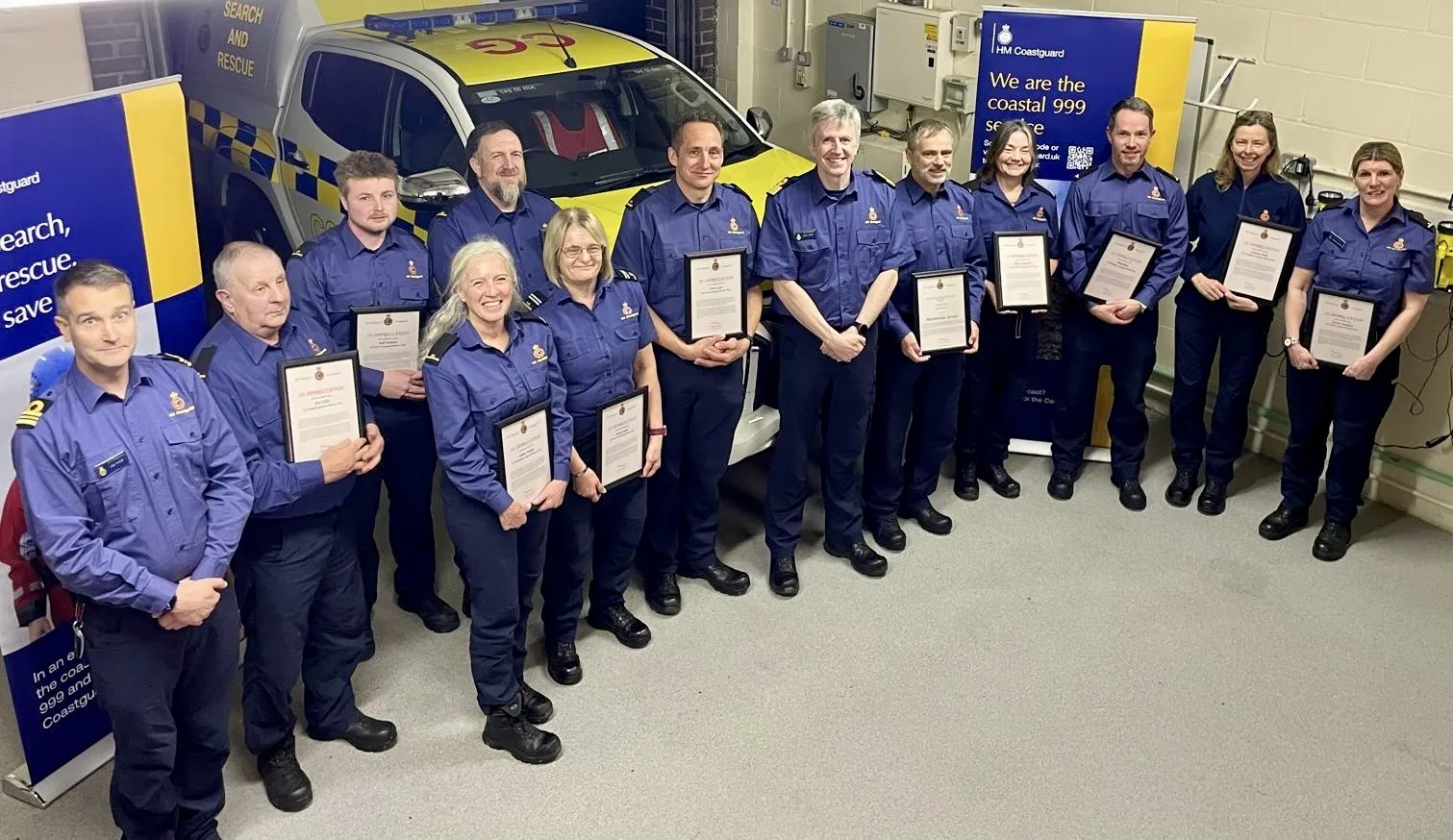
Chris’ friends called 999 and asked for the Coastguard. St Austell Coastguard Rescue Team was sent and arrived on scene quickly. Chris says: “It was so reassuring to see them come over the hill, I remember thinking that this was a system that clearly works very well.”
Officer in Charge Martin Cocks said: “Chris had exactly the right footwear and was well-equipped, but handling dogs under slippery conditions can lead to accidents. Unfortunately, given the thick mud and weather we’ve had, coastal paths can quickly become dangerous.”
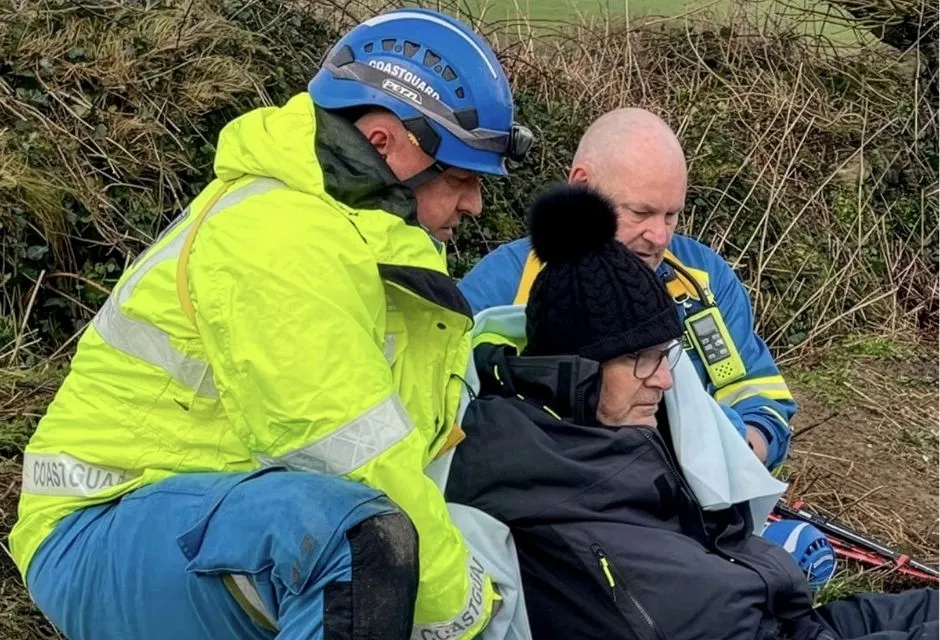
The team assessed Chris and put a splint on his foot, which made him more comfortable. They considered carrying him to the road in a stretcher but decided that the remote location and difficult terrain made extraction by foot difficult.
Station Officer Simon Blench said: “We did our primary patient assessment, immobilised the ankle, and strapped it up. It was interesting to learn that Chris had in-fact treated hundreds of these injuries himself but in that moment, he was a casualty in pain in need of our help.”

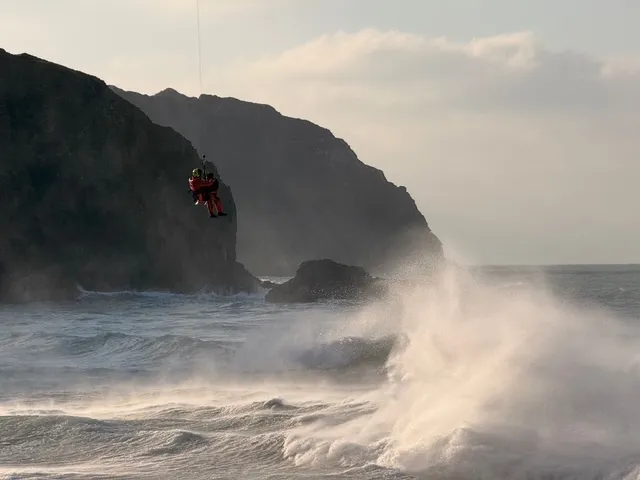
Coastguards sheltered Chris from powerful downdrafts and loose debris as an HM Coastguard rescue helicopter loomed overhead and lowered down its stretcher and winch paramedic. “It was a little bit scary because it was so windy,’ recalls Chris.
“But I knew they knew what they were doing. They were all brilliant – it was just so well thought out.”
After being airlifted to a local hospital, Chris’s X-rays were unequivocal – he'd sustained a trimalleolar fracture, a high impact and severe injury where inside, outside and rear bones are broken. A thick plaster cast and complete rest was prescribed, as Chris’ friends pushed carefully on with their trip.
“For someone who’s probably treated hundreds of broken ankles in their time, it was interesting to experience firsthand,” says Chris, who shared his appreciation with the Coastguard Rescue Team.
“I just really wanted to thank Coastguards for their phenomenal professionalism and reassurance during the incident.”
Speaking of his team’s work, Martin said: “It does make you proud of what we do when we come together and execute an effective rescue. It's nice to know that, despite our training, a senior and experienced surgeon thinks very highly of our casualty care.
“It really lifted our spirits to receive a letter of thanks from Chris, and it has taken pride of place at our Coastguard Station.”
St Austell CRT's top coastal walk safety tips
- Check the weather and tide forecasts. Prepare for changing conditions and wear suitable footwear and clothing.
- Look carefully at the terrain underfoot and consider whether routes should be avoided or attempted at another time under better weather.
- Always carry a reliable means of calling for help. If you’re in trouble on the coast, call 999 and ask for the Coastguard.