In February 1861, a catastrophic storm battered Whitby, driving ships towards the town’s jagged shoreline.
RNLI Whitby’s lifeboat crew launched repeatedly into lashing seas, saving dozens. But on their sixth launch, exhausted through fighting the mountainous surf, their lifeboat capsized.
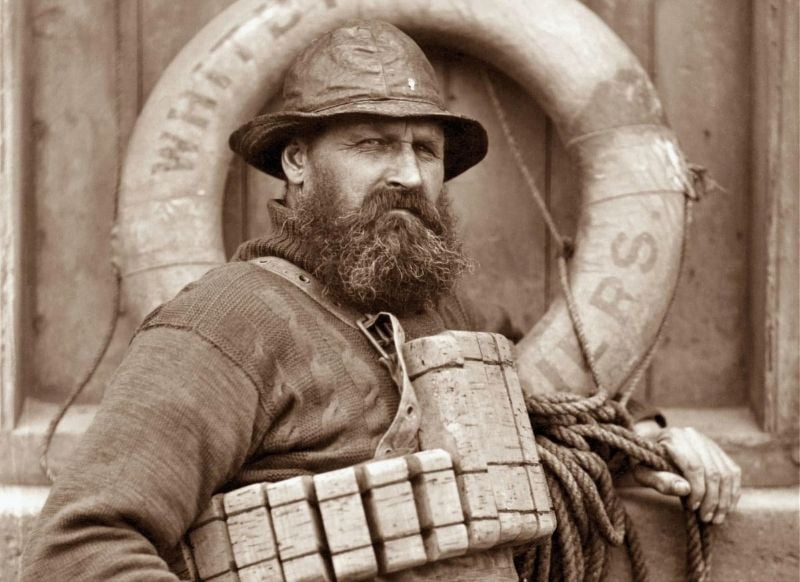
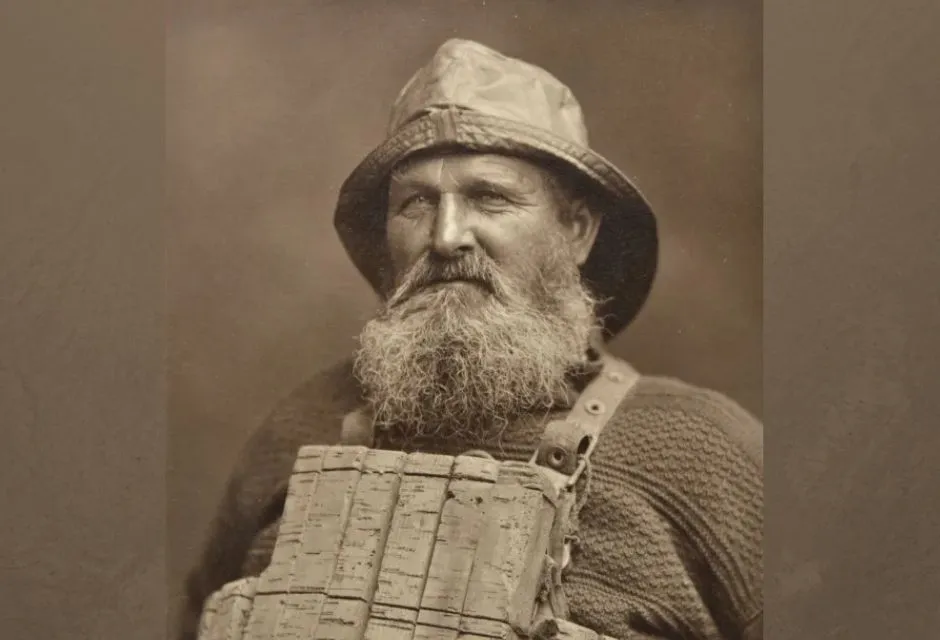
12 of 13 crew drowned within sight of shore. The sole survivor was Henry Freeman, the only man aboard wearing a new cork lifejacket.
Photographed by Frank Meadow Sutcliffe in the jacket that saved him, Freeman became a Victorian symbol of lifesaving design, and of Commander John Ross Ward’s pioneering work.
A life at sea
The second son of a Vice Admiral veteran of the Napoleonic Wars, John Ross Ward grew up among shipmasters, naval tacticians, boatbuilders and navigators. Mathematically gifted, he entered the Royal Naval College aged 13 on 3 November 1826.
Despite a familial lineage that offered an easy path to naval distinction, the creative writer, poet and prize-winning mathematician would become far better known for his lifesaving innovations than for combat on the high seas.
An officer for the times
Commissioned as a Naval officer in 1835, 21-year-old Ross Ward learned to lead in demanding conditions off the coast of Lisbon aboard the 20-gun HMS Tweed.
Catching the eye of the Admiralty, Ross Ward was then appointed Flag-Lieutenant to Sir Graham Moore, Commander in Chief at Plymouth, serving aboard HMS Impregnable and HMS Caledonia.
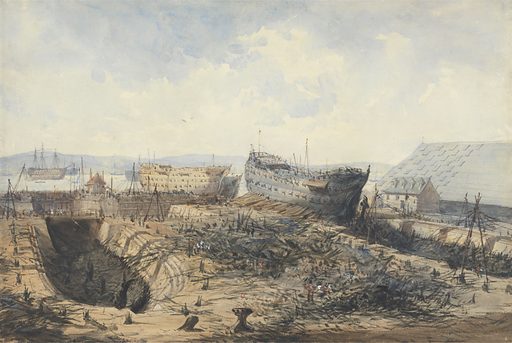
The Great Plymouth Dockyard Fire of 1841 and the wrecking of the sloop Ann, whose crew were bravely saved by fellow boatmen, reminded the 27-year-old officer of the sea’s unrelenting capacity for sudden and fatal danger.
Promoted to Commander in 1845, Ross Ward joined Her Majesty’s Coastguard the following year: a move that placed him at the centre of the Victorian drive to improve maritime safety and save lives around Britain’s coastline.
Grave losses
Ships almost 200 years ago bore little resemblance to today’s safer, more advanced vessels. Lifesaving provision was primitive, and early body worn floats were cumbersome and heavy.
When Ross Ward joined the Coastguard, rescues at sea were perilous. Land-based rocket lines could reach some stranded crews, but launching small rescue boats into gales and surf remained deadly.
The South Shields Lifeboat Disaster of 1849, in which Providence’s 20-strong crew drowned attempting a rescue at Herd Sands, underlined the need for change. But a turning point came in 1851, when the Duke of Northumberland offered a 100-guinea prize for the best self-righting lifeboat design, around £19,000 in today’s money.
More than 280 models were submitted from across the globe. To test them, the duke needed someone with unflinching seamanship and a strong grasp of mathematical physics. Commander Ward was the obvious choice.
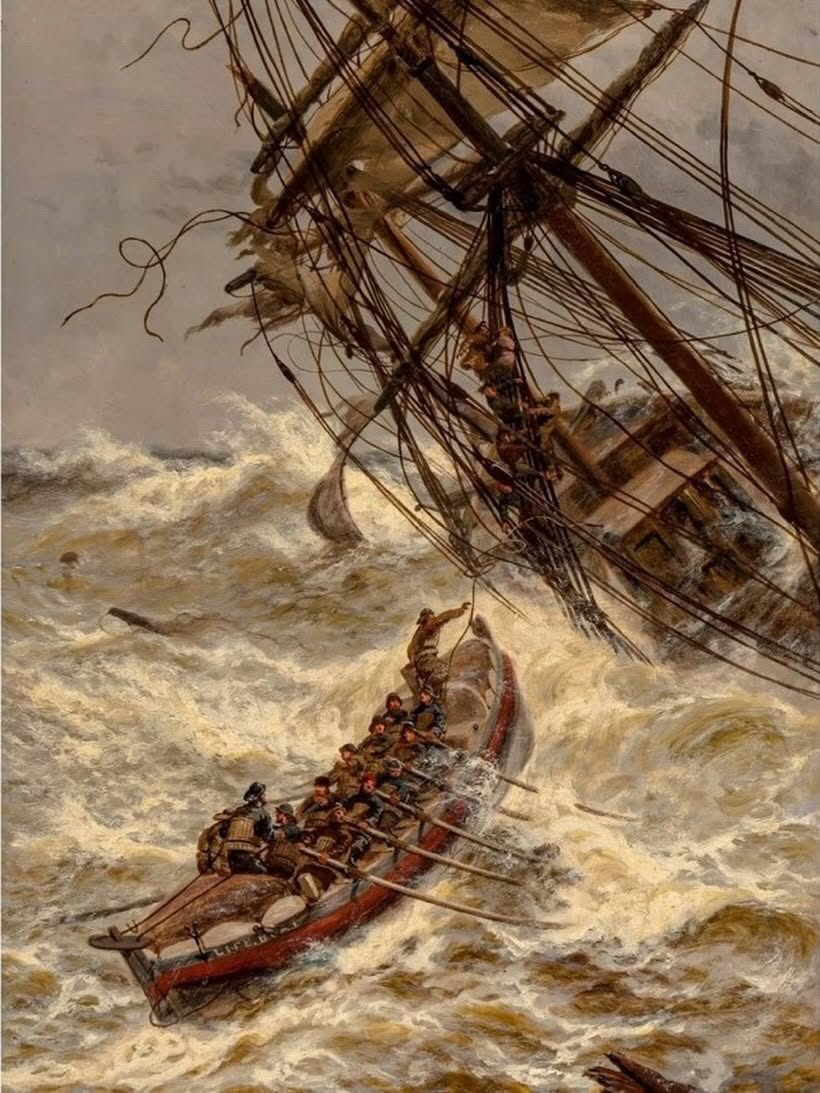 Testing the limits of survival
Long before test pilots pushed aircraft to their limits, Ward was doing the same with prototype lifeboats, taking them into some of the most dangerous waters of the age in pursuit of safer rescue craft.
Applying hull stability and fluid dynamics, Ward studied why vessels failed and helped refine the mechanics that shaped lifesaving craft for decades.
The aim was more than just designing better boats. Ward was searching for ways to make rescue at sea safer for both casualties and rescuers, an ever-evolving challenge that remains at the heart of search and rescue operations today.
Ward’s courage was recognised with the RNLI’s Silver Medal for his devotion to duty during lifeboat experiments and while based at Stockton-on-Tees, he also earned the Royal Humane Society’s Silver Medal after leaping into freezing water on a pitch-black night to rescue a woman in danger.
Sea trials and personal safety
Ward didn’t only observe the trials from shore. As Chief Inspector of Lifeboats, he went aboard in violent seas, commanding vessels to study how they handled.
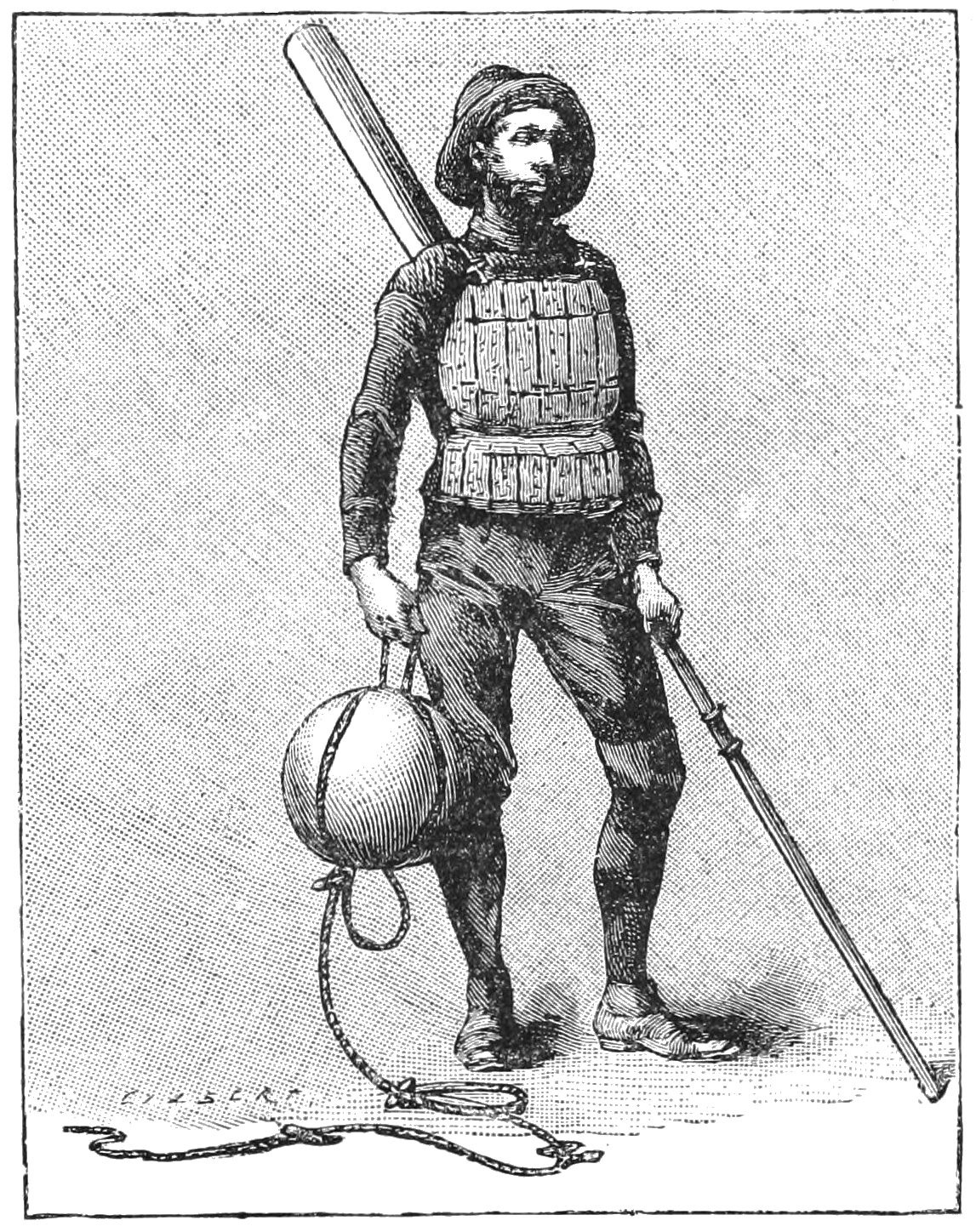 Ward turned next to personal survival. Could protection worn by crew members save lives where boat design alone could not? His answer was simple: circular strips of cork sewn vertically into a flexible vest which provided buoyancy while leaving the arms and body free.
So successful was the equipment that, in November 1854, the RNLI began supplying Ward’s design to its lifeboat crews. It became one of the first practical lifejackets to be distributed widely as lifesaving kit.
Championing lifesaving at sea
After his RNLI successes, Ross Ward turned to another group at risk: fishermen. In 1865, on his recommendation, the RNLI built several safety fishing boats based on his designs, intended to encourage safer working craft among fishing communities.
His work reached beyond the lifeboat stations of Victorian Britain. Through design, standards and practical testing, Ward helped build a culture of safer rescue that still speaks to the work of HM Coastguard today.
Retiring from active duty aged 70 in 1883, Ross Ward received the RNLI’s Gold Medal and the Institution’s thanks, specially inscribed on vellum. He remained in active service until his death in June 1890.
A lasting Coastguard legacy
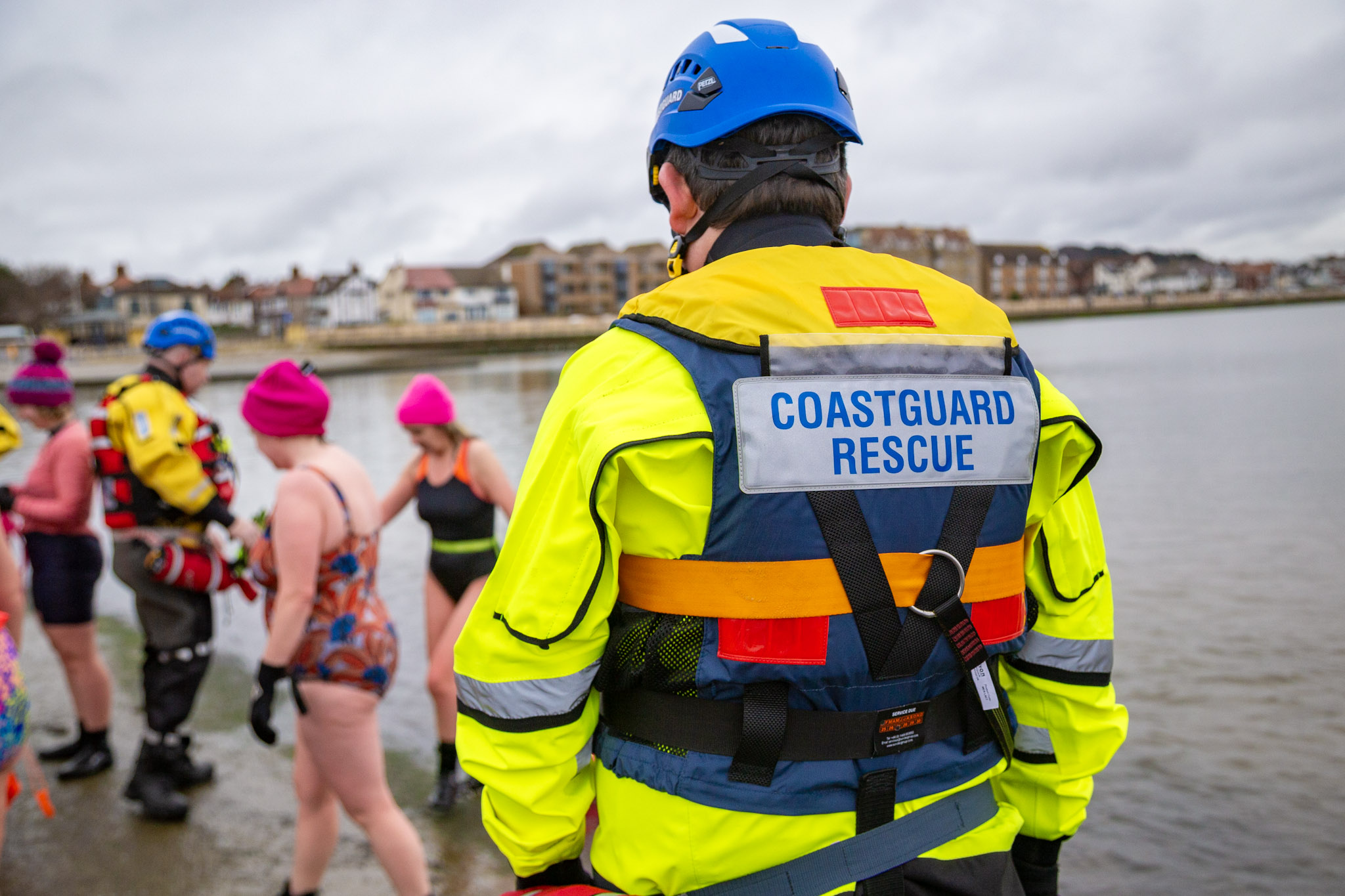 Ross Ward’s innovations reached far beyond the lifeboat stations of Victorian Britain. His work influenced safer rescue craft, improved survival equipment and a spirit of practical innovation that continues to underpin modern search and rescue.
Deputy Chief Coastguard John Craig said: “Admiral John Ross Ward helped change the course of lifesaving at sea. Almost two centuries on, his legacy still shapes how we approach search and rescue.
“He didn’t seek personal glory or recognition. Instead, through quiet influence and relentless innovation, he helped embed safety at the heart of the services we know today.
“From the Personal Flotation Devices worn by Coastguard Rescue Teams and lifeboat crews to the self-righting technology used in modern lifeboats, Admiral Ross Ward inspired an enduring blueprint for saving lives at sea.”