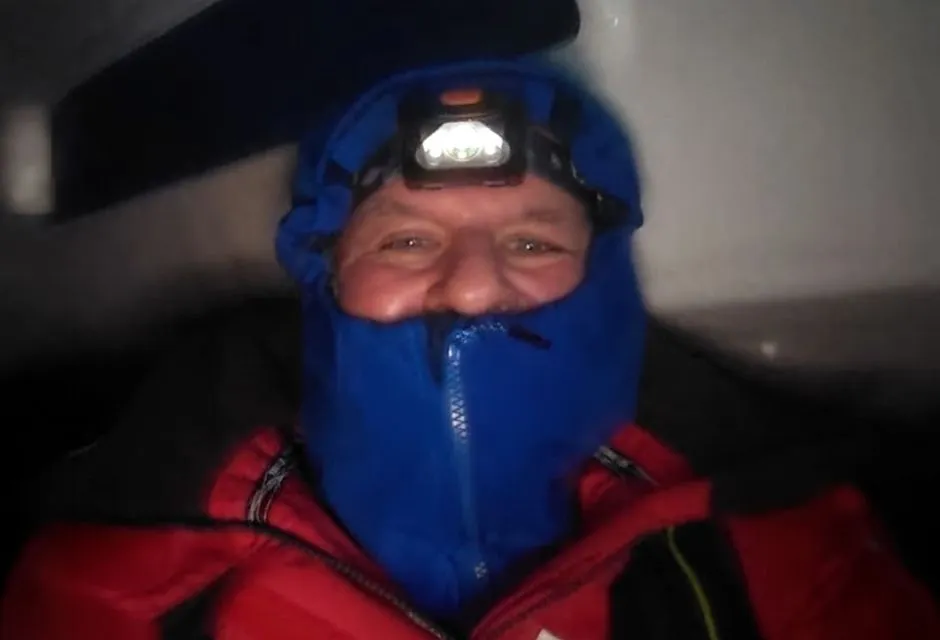
Chris Cowlard’s boat was smashed by the conditions at the Skerries, a group of islets off Anglesey famous for its lighthouse and sea birds.
His eight-metre vessel was soon dismasted, forcing Chris to abandon ship in his lifejacket and wait in the waves for rescue.
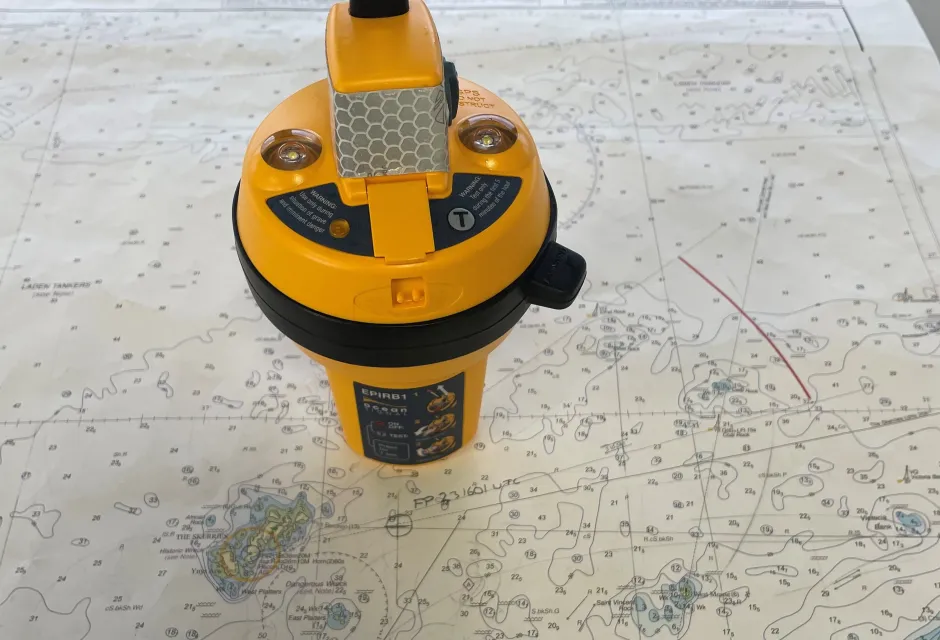
Forward planning made the difference as he was able to broadcast his location with an emergency position-indicating radio beacon (EPIRB) – bought less than three weeks before the incident.
Chris (71), from Porthmadog, is a retired firefighter and an experienced yachtsman with 40 years sailing under his belt.

He said: “I had double-checked the chart and there was a course down the inside. I checked again and adjusted for the tide.
“Then there was a thumping great bang. I knew what was happening immediately. I was being lifted by the waves and dropped. Bang! Bang! The mast went down and over the side.”
Having installed his VHF antenna on the stern instead of the now collapsed mast, Chris was able to broadcast a radio mayday as soon as he got into trouble at about 4pm on 24 June, alerting Holyhead Maritime Rescue Coordination Centre (MRCC).
I just said a quick prayer not to let me die
Chris added: “I got a voice at the other end of the radio straightaway, so I had confidence knowing that someone had received the mayday. My training kicked in and I knew what I had to do.”
Crucially, Chris could accurately show where he was with his EPIRB, which automatically began signalling his location as soon as it went into the water.
With the vessel listing, Chris said: “A wave washed right through the cockpit and took the EPIRB and liferaft right out. It was obvious I would have to vacate!”
He inflated his lifejacket and went into the churning sea, having grabbed his VHF radio from which he was able to hear the rescue efforts.
He said: “I could hear them say they were receiving the EPIRB and it was in a similar position to mine. I just said a quick prayer not to let me die.”
Just 30 minutes later – with the cold already setting into his body – Chris was pulled from the sea by the RNLI’s inshore lifeboat from Holyhead, directed there by HM Coastguard.
He said: “I didn’t even see them come. I felt a bump on my shoulder and then an arm on mine and a voice saying, ‘You’re alright, mate. We’ve got you’. A hand came in and I was up and out.
“I was so relieved. The moment I hit the bottom of that lifeboat I knew I was safe.”
When I called my wife Pauline she said, ‘You have done what?!’
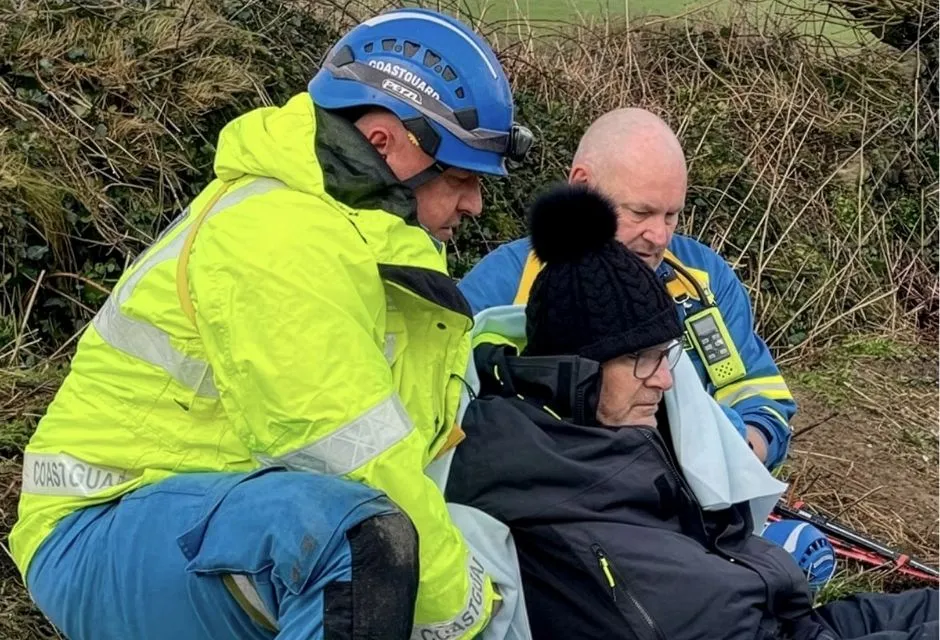
Chris was transferred to the all-weather sister lifeboat from where he was winched up by the HM Coastguard search and rescue helicopter from Caernarfon. It flew him for transfer to Ysbyty Gwynedd Hospital in Bangor.
Three nearby vessels alerted to the incident by a broadcast from Holyhead MRCC had stood by to offer support until Chris was confirmed safe.
He was cold and had suffered a bang to the nose but was otherwise unharmed. His EPIRB had been picked up and was returned to him the next day. Even his glasses were still round his neck.
“When I called my wife Pauline she said, ‘You have done what?!’” Chris recalled. “I said to her, ‘Is there any chance you could pick me up from the hospital and bring a complete set of clothes?’”
Thanking HM Coastguard and the RNLI for the “textbook” rescue, Chris said: “I was not getting out of it on my own, that’s for sure. Without them, I would have bobbed around until I fell unconscious.
“Then I would have simply sunk below the surface.”
Being prepared, particularly with a registered EPIRB, makes all the difference to how it can end
Maritime Operations Officer Paul McGinness was part of the team that coordinated the rescue from Holyhead MRCC.
On behalf of Holyhead MRCC, Paul said: “This rescue shows how even the most experienced sailors can get into a scrape. Being prepared, particularly with a registered EPIRB, makes all the difference to how it can end. We’re so glad Chris came home safe.
“A thank you to the vessels in the area that also assisted.”
Chris Cousens, RNLI Water Safety Lead for Wales, the North West and Isle of Man, said: “This was a real team effort between all the emergency services and Chris is incredibly lucky.
“Thanks to Chris being able to give precise details of his position via the EPIRB and the fact he was carrying a handheld radio, he was quickly located by the Holyhead volunteer crew and pulled out of the water.
“He was also wearing a lifejacket, which we know increases the chances of survival in man overboard situations.”
For more sailing safety tips, visit hmcoastguard.uk/onboard
• If you see an emergency by the coast, call 999 and ask for the Coastguard.